
There was a time when I would say: I carve large linocuts.
It sounded accurate. It wasn’t untrue. But it wasn’t the whole story.
It sounded accurate. It wasn’t untrue. But it wasn’t the whole story.
Over the past few years, I began to understand that what I do is not simply carving, drawing, or printing. It is something slower, deeper, and more embodied. A process that feels less like making an image and more like taking root inside it.
I now describe this methodology as Human Rooting.
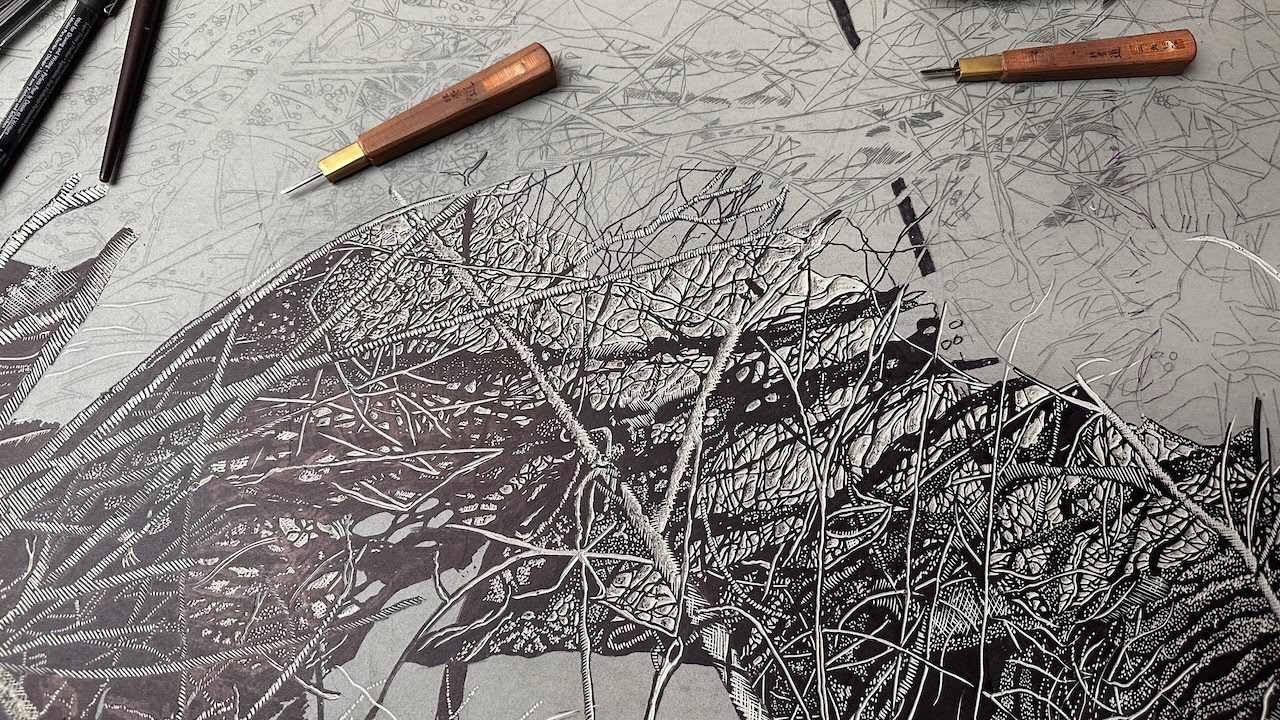
A Small Origin Story
My practice gradually moved towards increasingly dense structures: tangled branches, root systems, layered botanical networks, architectural frameworks. The works became larger. The lines became more intricate. The process extended over weeks.
What surprised me most was not the scale, but the time.
I noticed that finishing a large linocut often brought a subtle sense of loss. Not because the work was over — but because the rhythm of inhabiting that structure had ended. The carving was not only a technical act; it was a temporal environment. I had been living inside it.
That was the moment I realised: I was not simply constructing images. I was embedding myself in complex systems through sustained, repetitive gesture.
What Is Human Rooting?
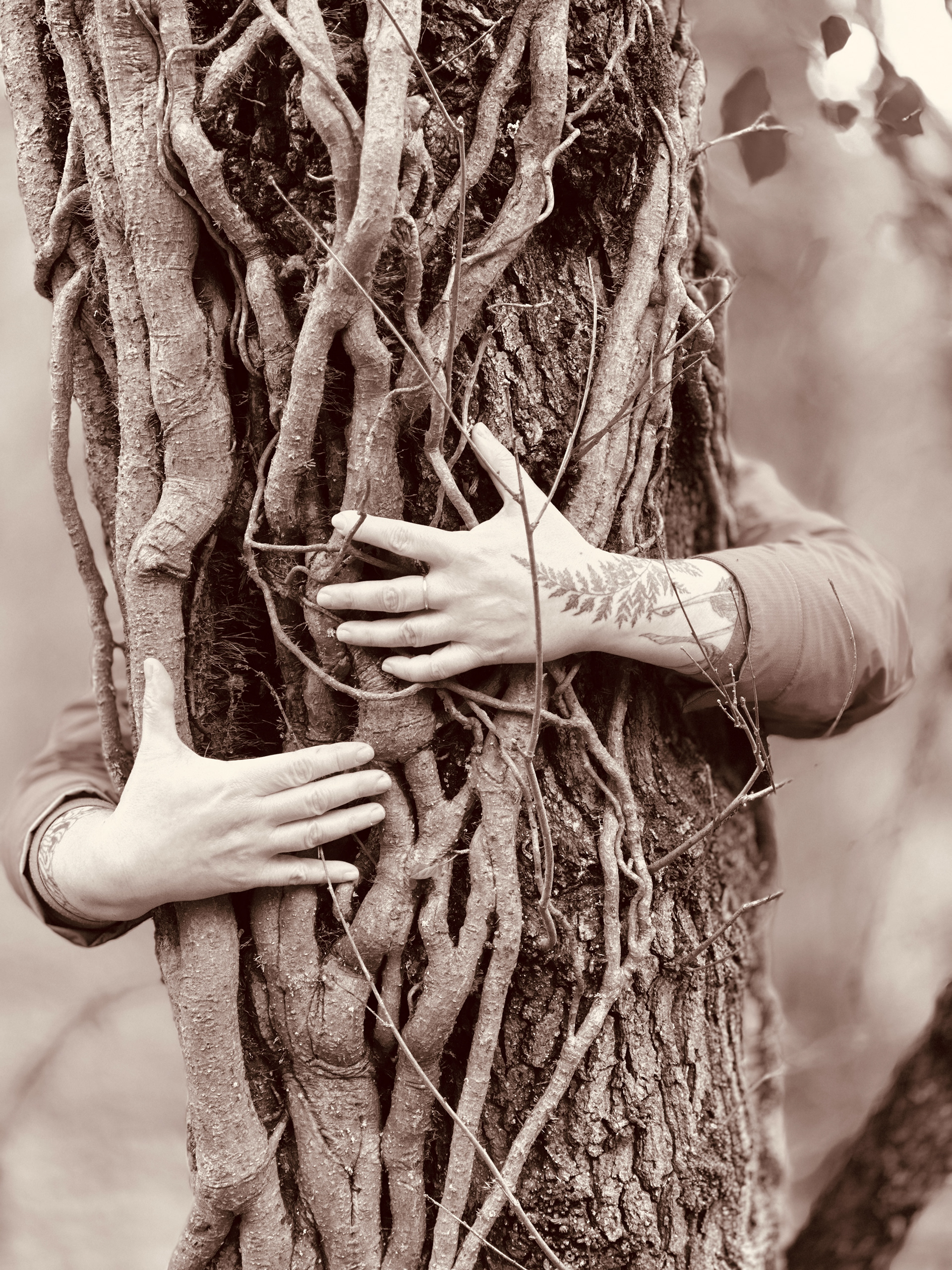
Human Rooting is an embodied practice of establishing presence within complexity.
Rather than simplifying dense structures, I enter them.
Rather than resolving chaos, I inhabit it.
Through repetition, duration and attention, structure begins to emerge.
Rather than resolving chaos, I inhabit it.
Through repetition, duration and attention, structure begins to emerge.
It is not about control.
It is about trajectory.
It is about trajectory.
A human line moving through a larger system.
Networks: Natural, Informational, Relational
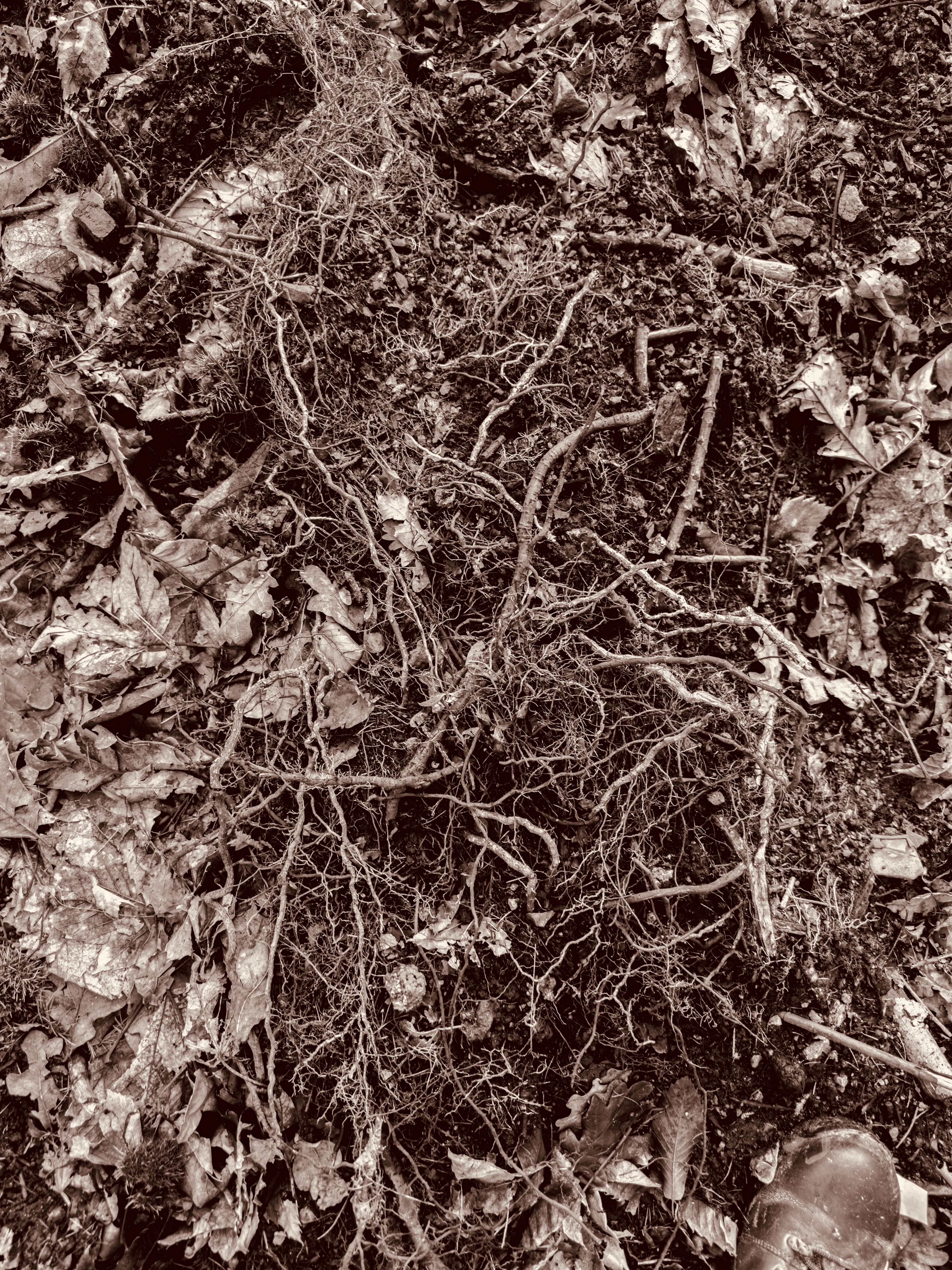
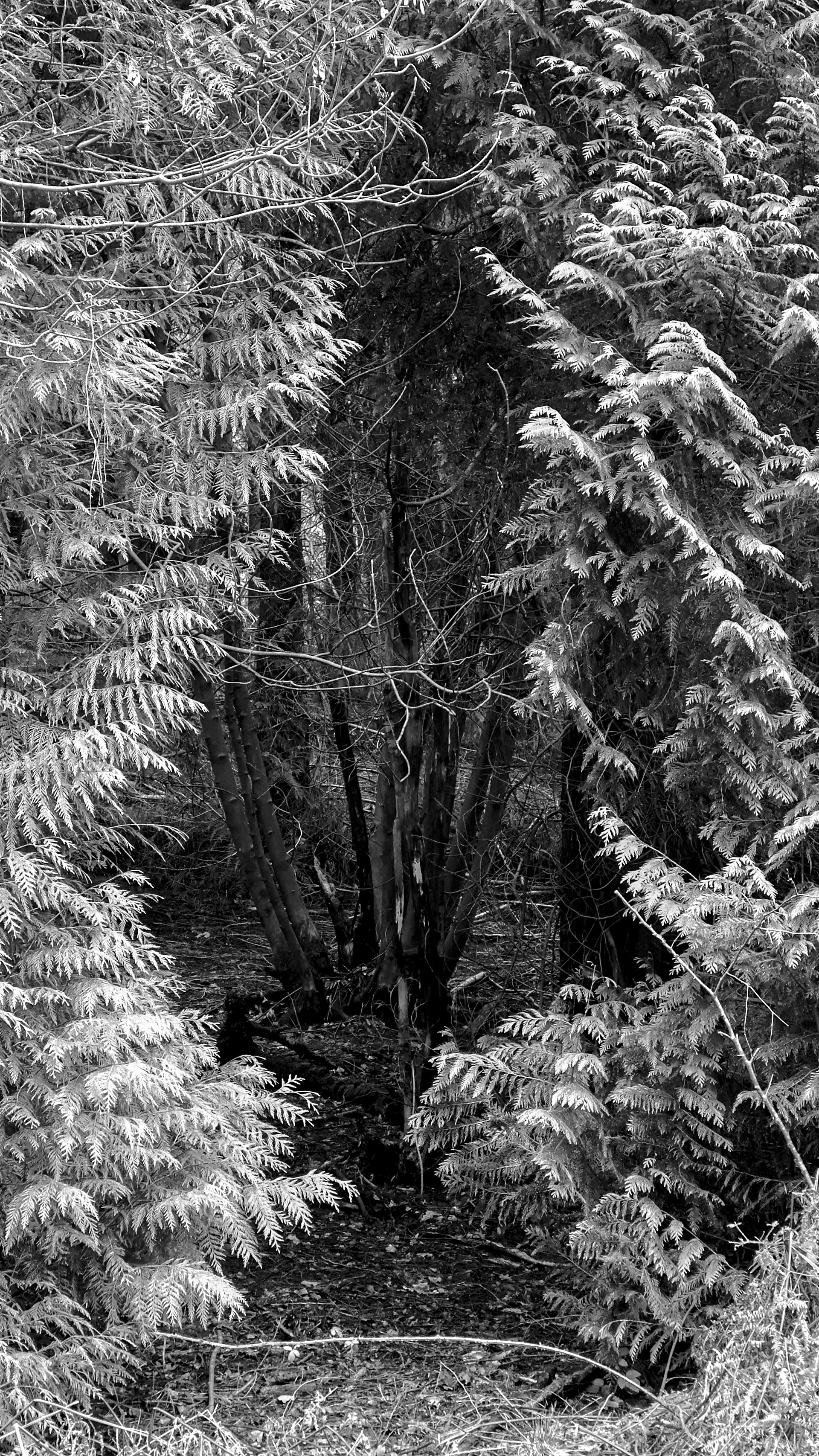
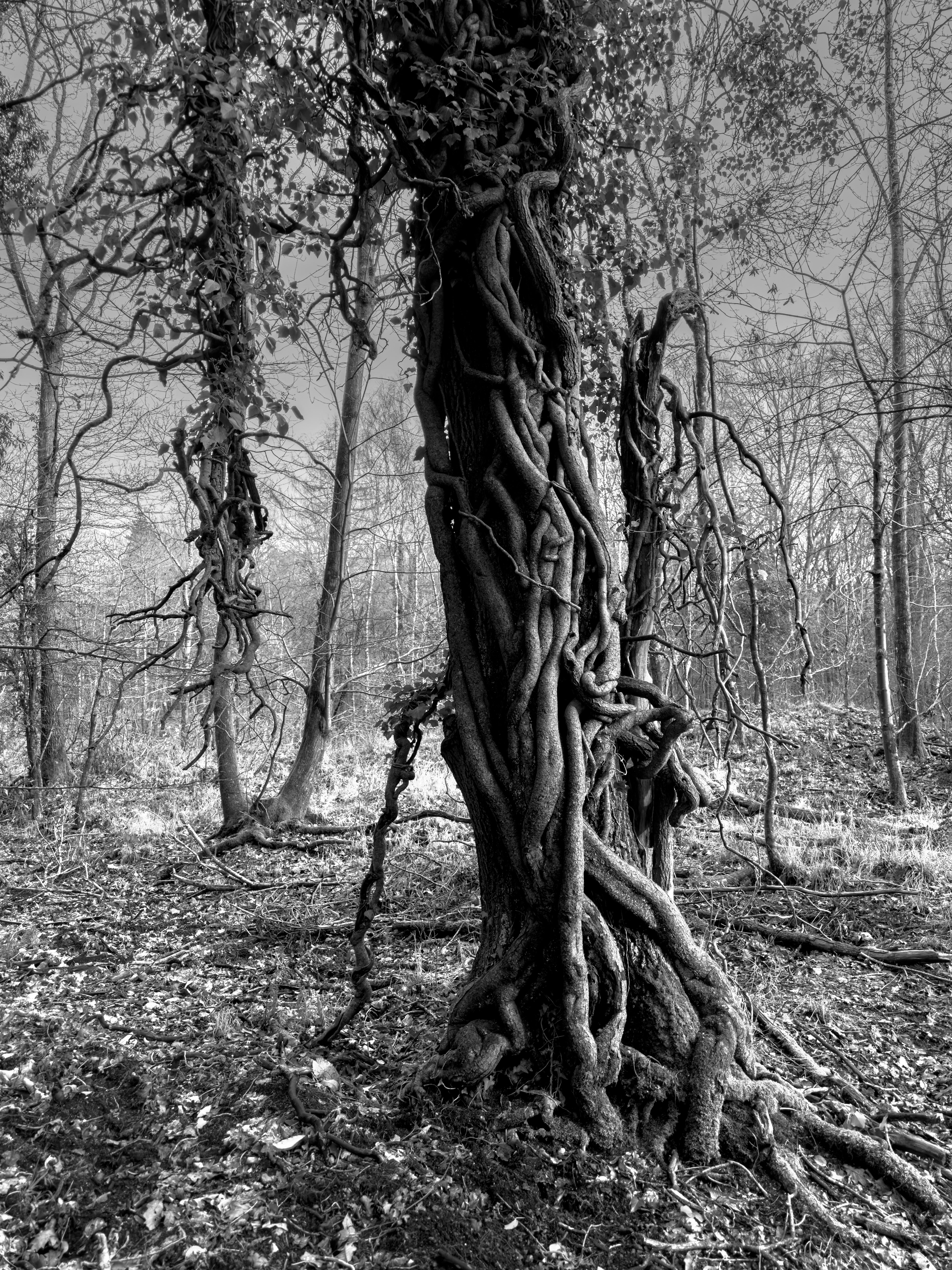
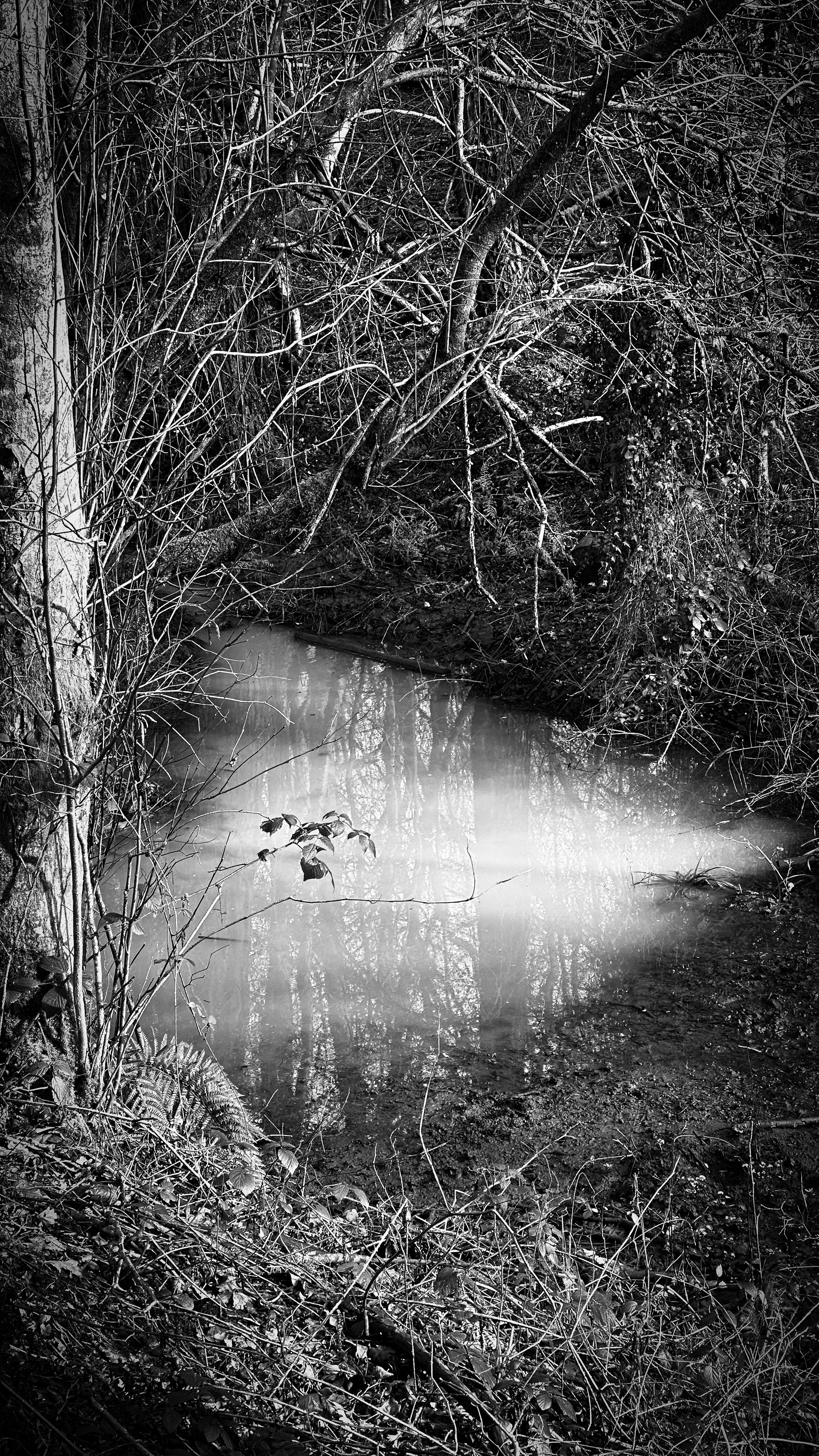
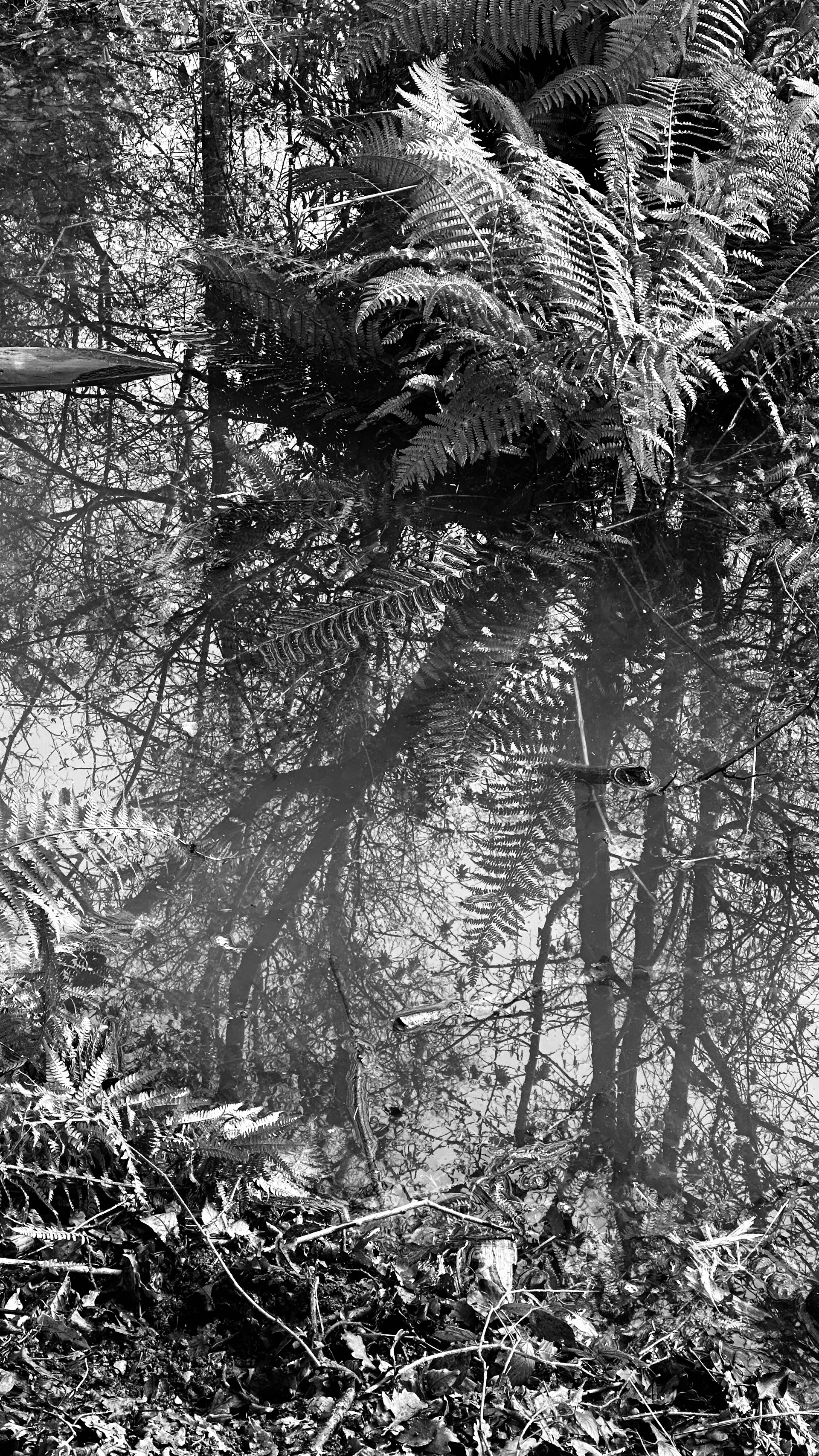
My work often draws from organic root systems — the visible and invisible networks that connect trees, soil and fungi. These biological systems regulate, exchange and sustain life. They are complex, yet deeply coherent.
At the same time, we live within another kind of network: the informational web of digital systems. It connects us, expands perception, and sustains communication — yet it operates through data rather than embodied regulation.
Alongside both exists a third field: direct human relational networks — presence, non-verbal communication, shared space, biological co-regulation.
My work does not oppose these systems. Instead, it acknowledges their coexistence and investigates what it means to initiate biological presence within overlapping networks.
The question is not how to escape complexity — but how to take root within it.
Large Linocuts: Time as Soil
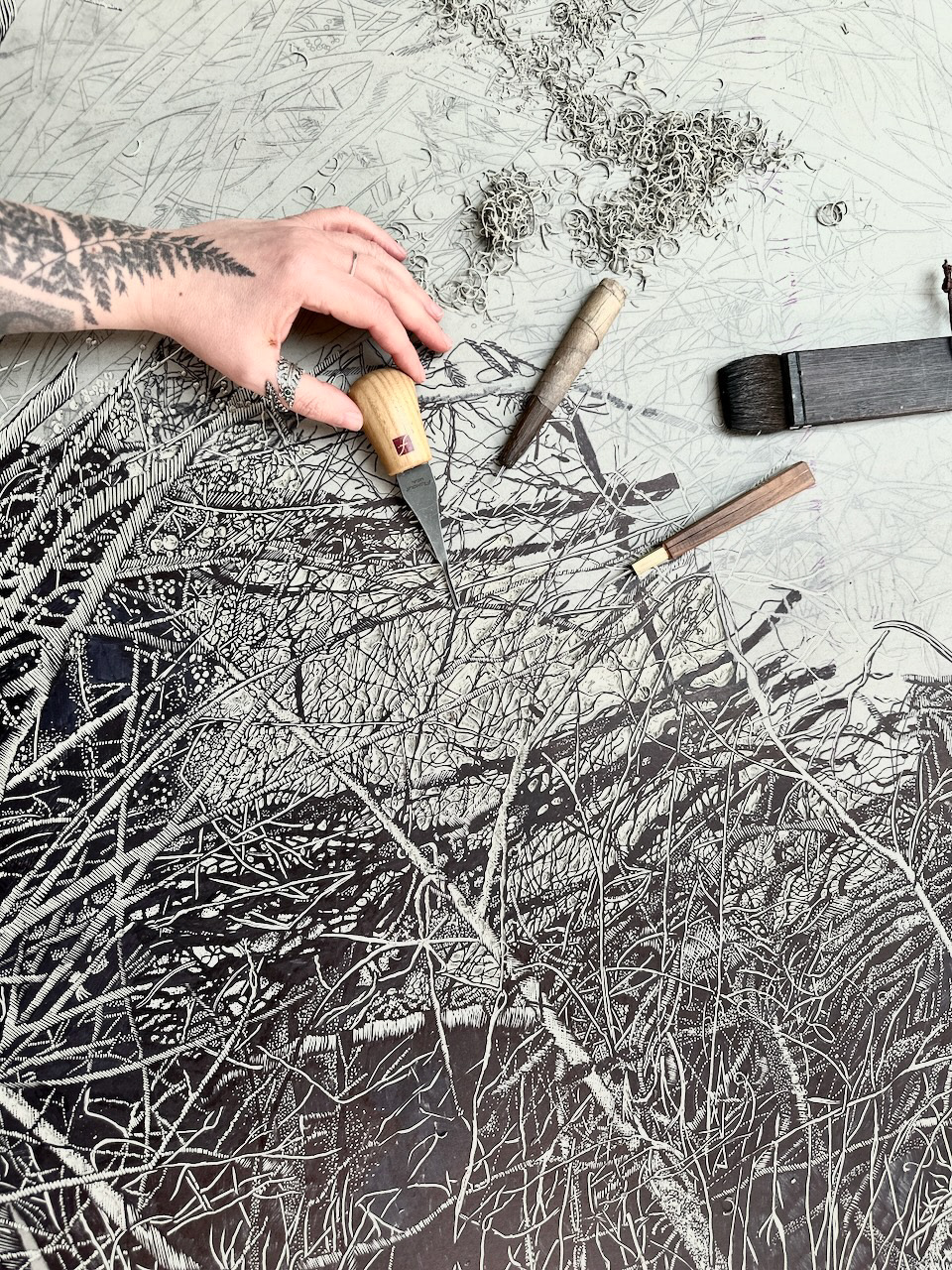
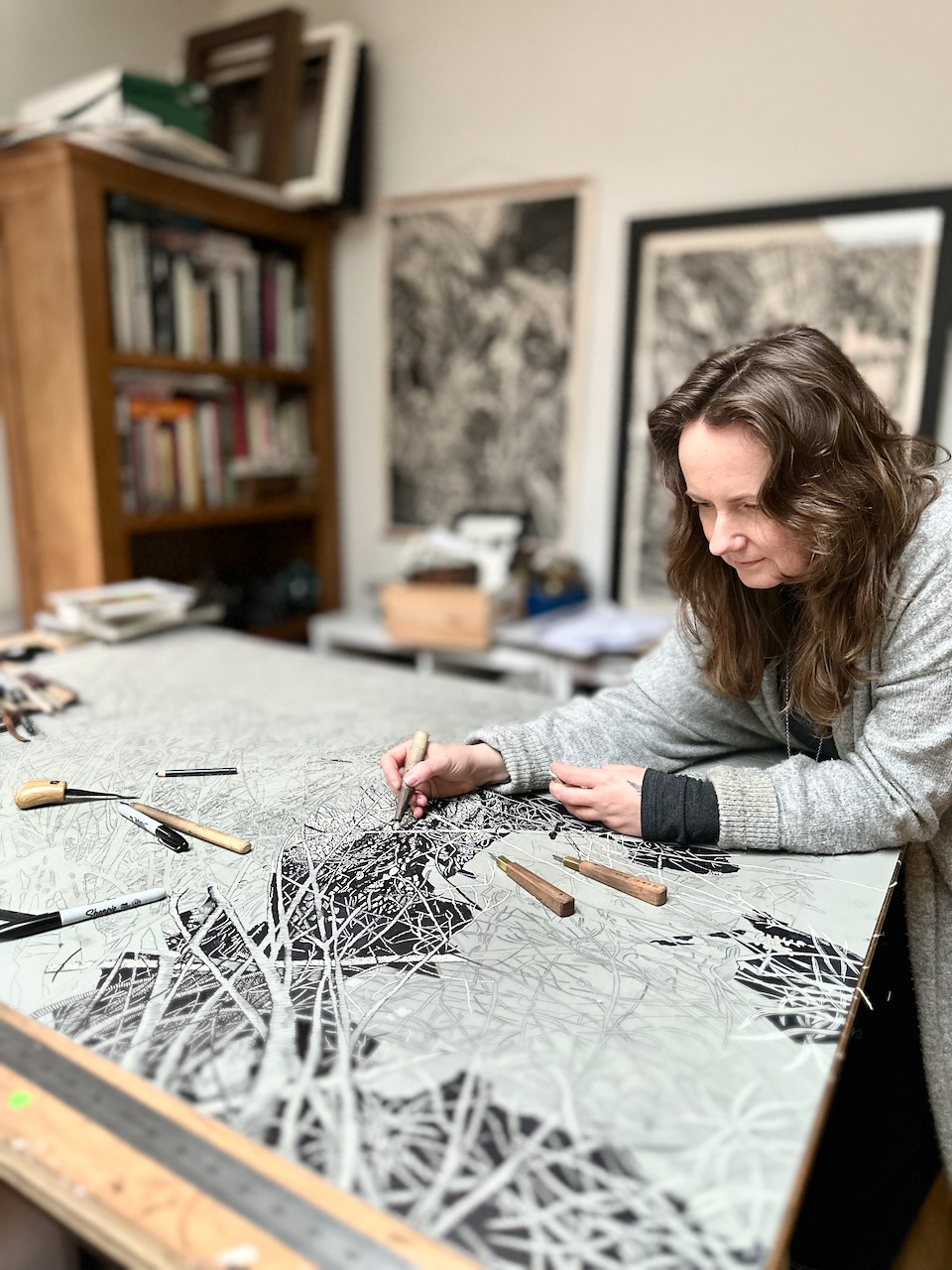
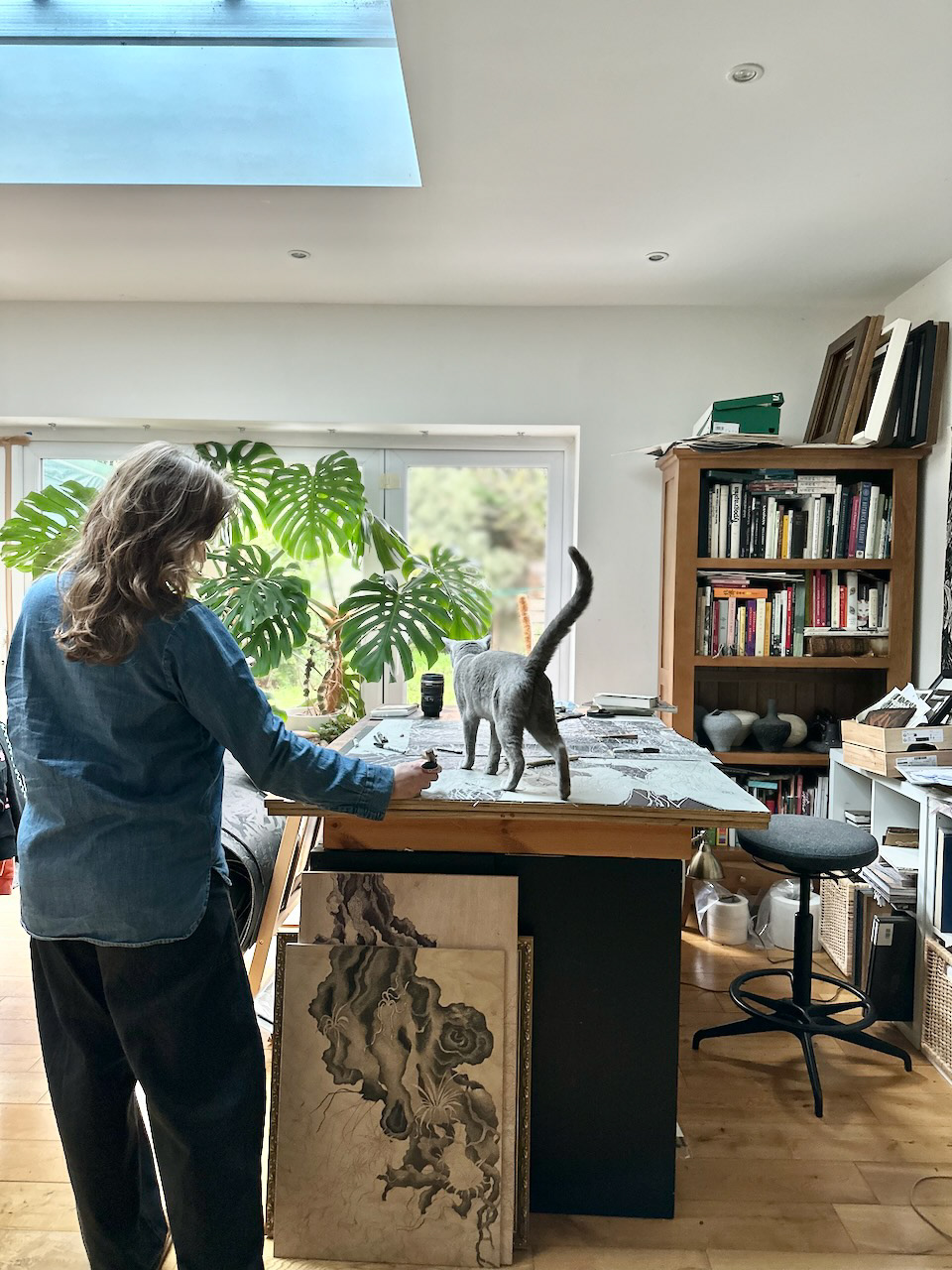
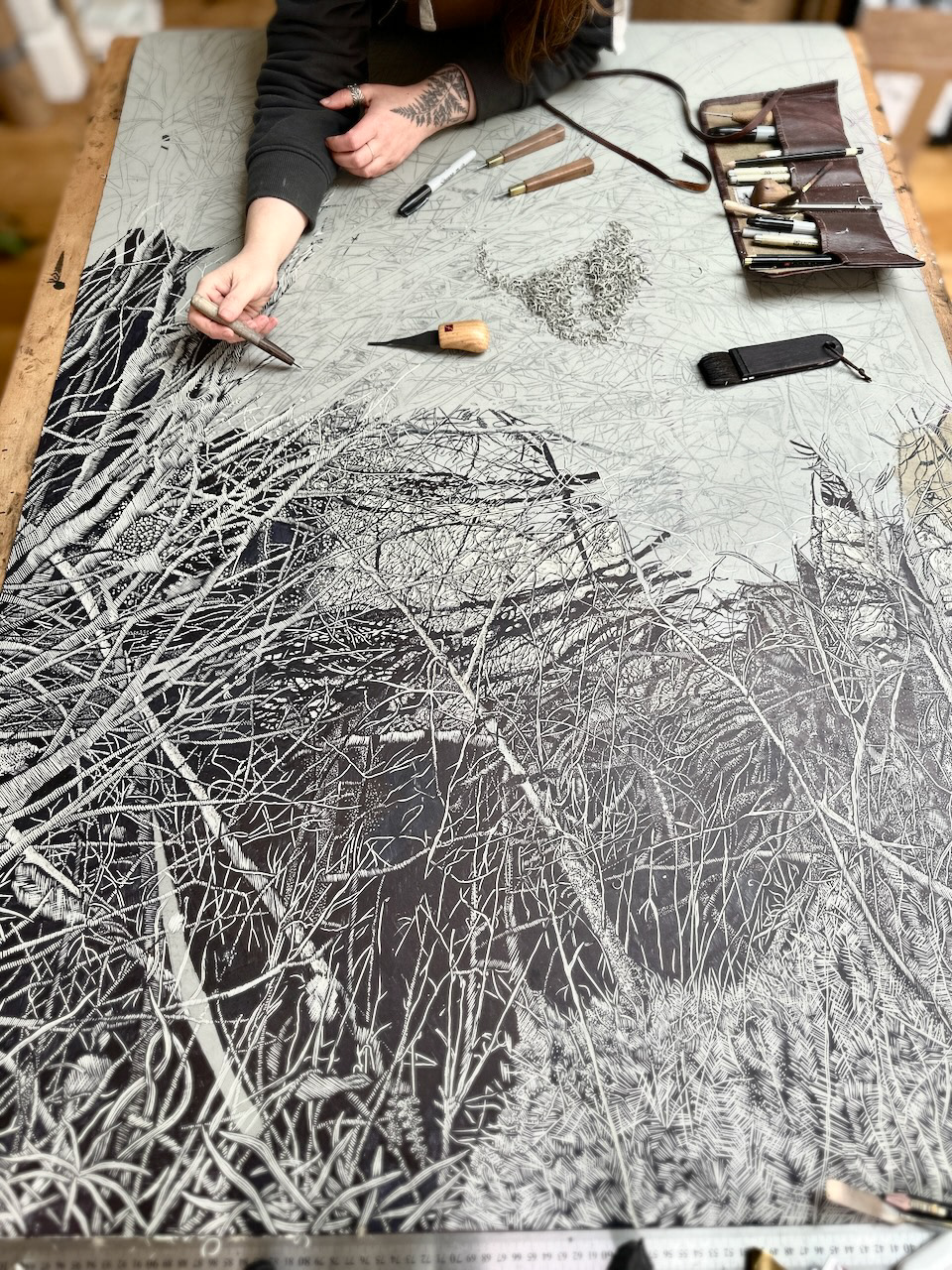
My large-scale linocuts function as temporal terrains. Weeks of carving allow me to inhabit dense structures physically and rhythmically. The scale extends duration; duration deepens immersion.
The networks in these works are not decorative. They are environments.
Within them, I introduce a distinct human trajectory — sometimes subtle, sometimes pronounced — but always embodied. The mark is not imposed on the system; it grows through it.
Smaller Etchings: Intimate Rooting
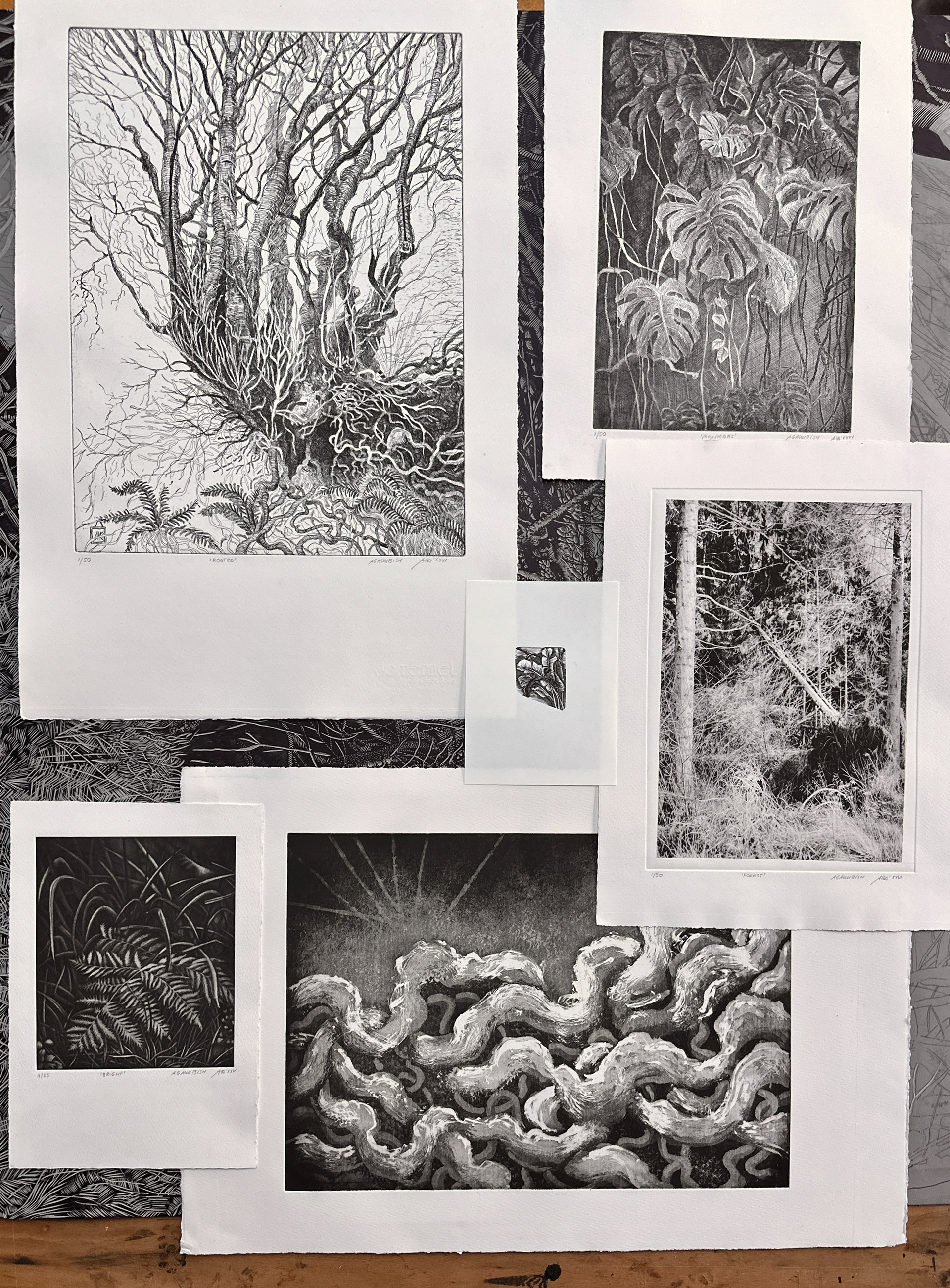
If the large linocuts are immersive terrains, the smaller etchings operate differently. They are concentrated sites of rooting — intimate, focused, precise.
The needle moves more lightly, but the gesture remains the same: repetition, embedding, emergence. The scale changes; the methodology does not.
Presence as Trajectory
In more recent works, a thin red circular line began to appear within the dense black networks. It is fragile, iterative, irregular — built from many repeated gestures rather than a single perfect stroke.
It is not a boundary.
It is not protection.
It is a visible trace of human presence.
It is not protection.
It is a visible trace of human presence.
Even within overwhelming organic complexity, a trajectory can be established.
Why It Matters
Human Rooting is not a rejection of digital life, nor a romantic return to nature. It is a recognition that contemporary existence unfolds across multiple network systems.
The challenge is not to choose one over the other.
The challenge is to remain biologically present within them.
The challenge is to remain biologically present within them.
My work is a slow, material investigation of that possibility.