COMMON PRESENCE
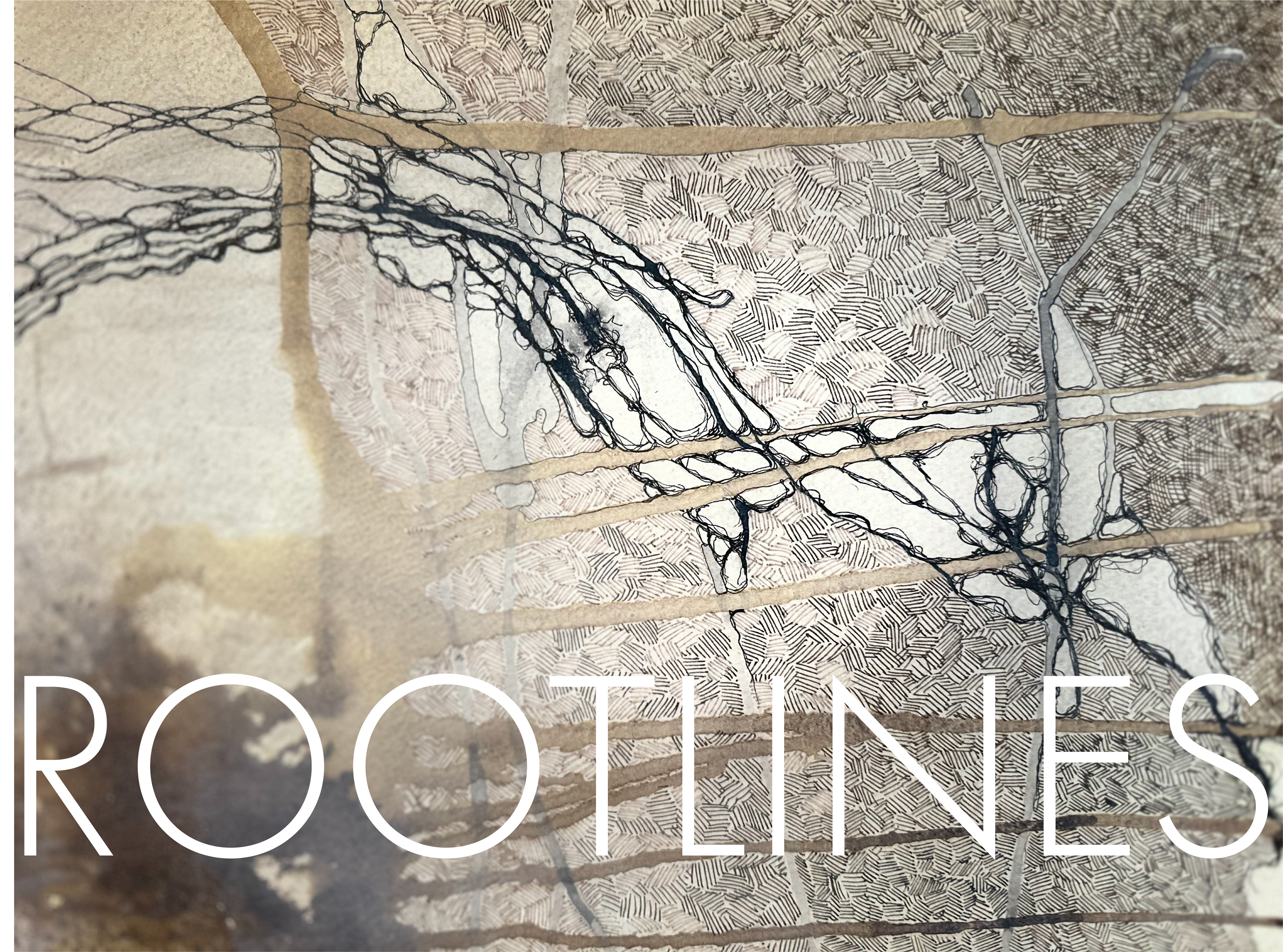
Rootlines - Common Presence is an ongoing artistic research project exploring forests, human presence and the relationships that connect living systems across time.
Developing from my earlier Rootlines research, the project expands ideas of rooting, belonging and place into a broader enquiry into coexistence, embodiment and participation within living environments. It is structured around three interconnected strands.
Forests considers woodland as a living, layered environment shaped by time, growth, decay, memory and accumulated relationships. Rather than approaching forests simply as collections of individual trees, this strand looks at them as complex spaces of coexistence, continuity and change.
Human Rooting explores rootedness as something that can be formed, carried and recreated. It considers attachment to place, migration, memory and belonging, but also the possibility of carrying one’s roots while moving through different places. Within my own practice, repeated engagement with trees, roots, branches and woodland structures also becomes a form of visual rooting, where making itself creates continuity and orientation.
Living Networks focuses on the human body as a living organism physically participating within wider ecological systems. It considers the continuous exchange between humans and forest environments through breath, atmosphere, microorganisms, sensory experience and physiological response. Rather than positioning the human as an observer of the forest, this strand looks at the body as already embedded within it, affected by the environment and affecting it in return.
Across all three strands, time acts as a connecting element: shaping landscapes, relationships, memory, biological systems and the ways in which both humans and forests change.
The project develops through field research, photography, printmaking, drawing, artist books and installation, remaining open to new connections, sites and forms as the research evolves.
The research develops through fieldwork, photography, printmaking, drawing, artist books and installation. These approaches form different ways of observing, recording and responding to the relationships explored within Rootlines - Common Presence.
FIELD RESEARCH
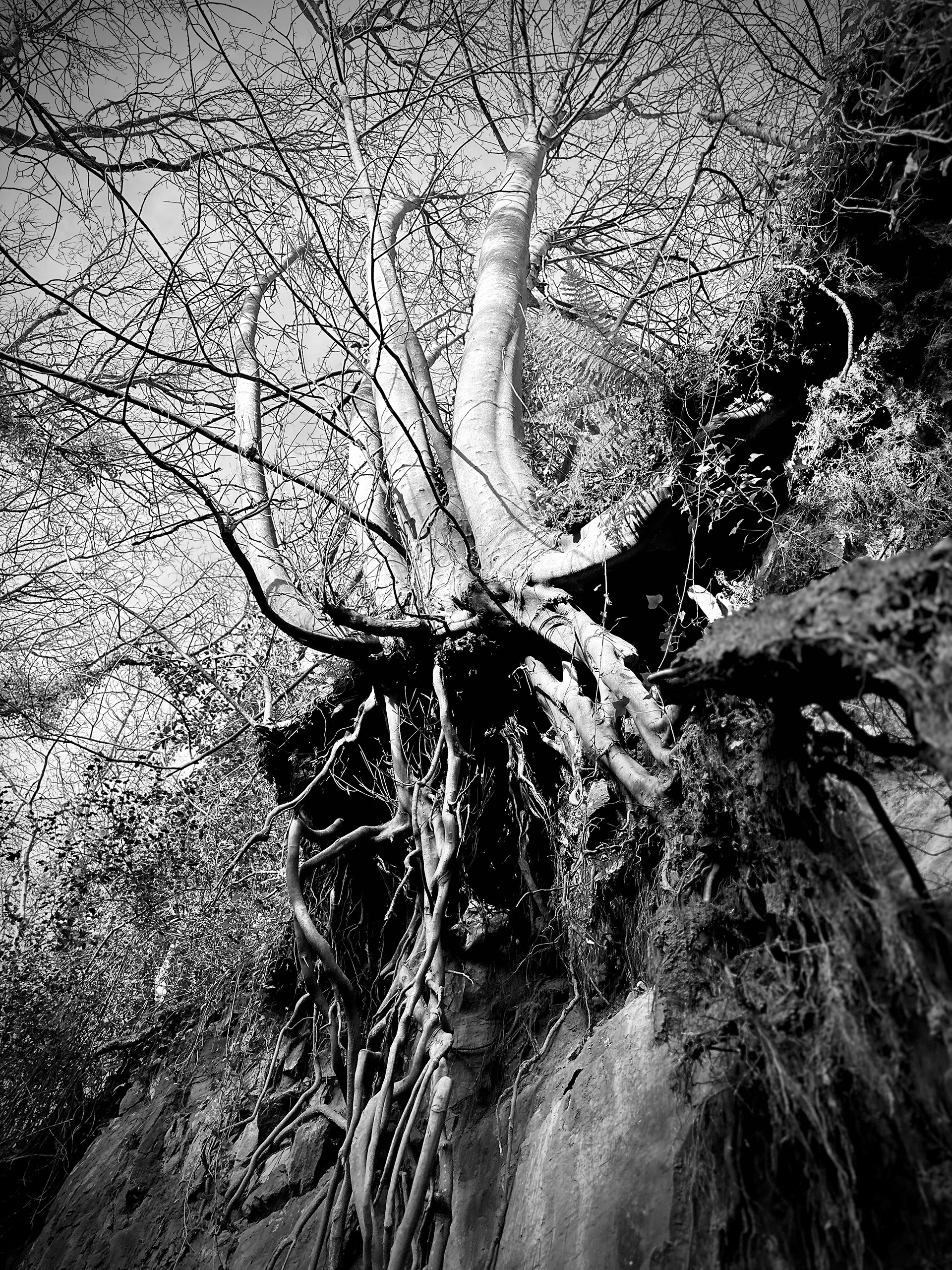
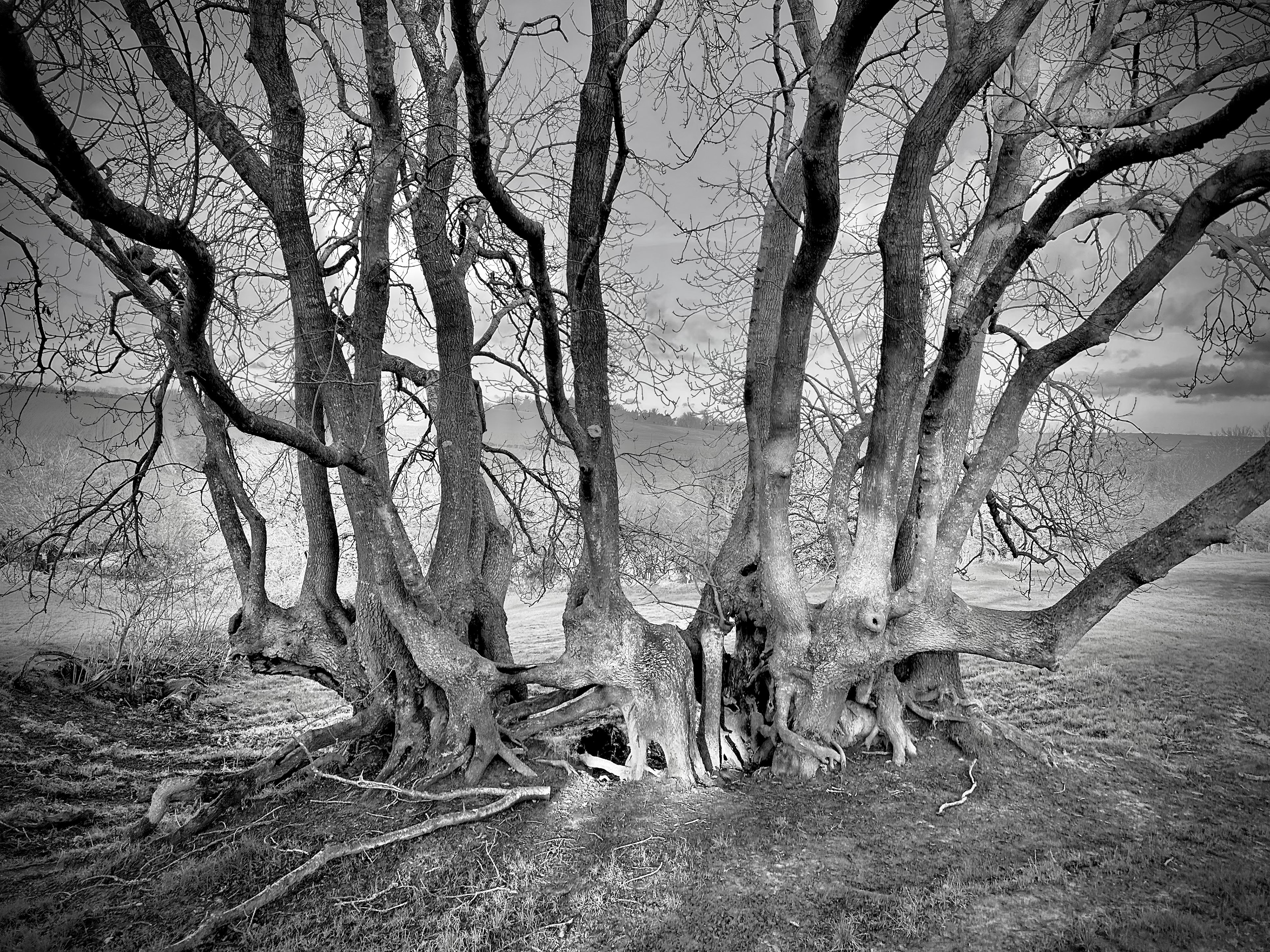
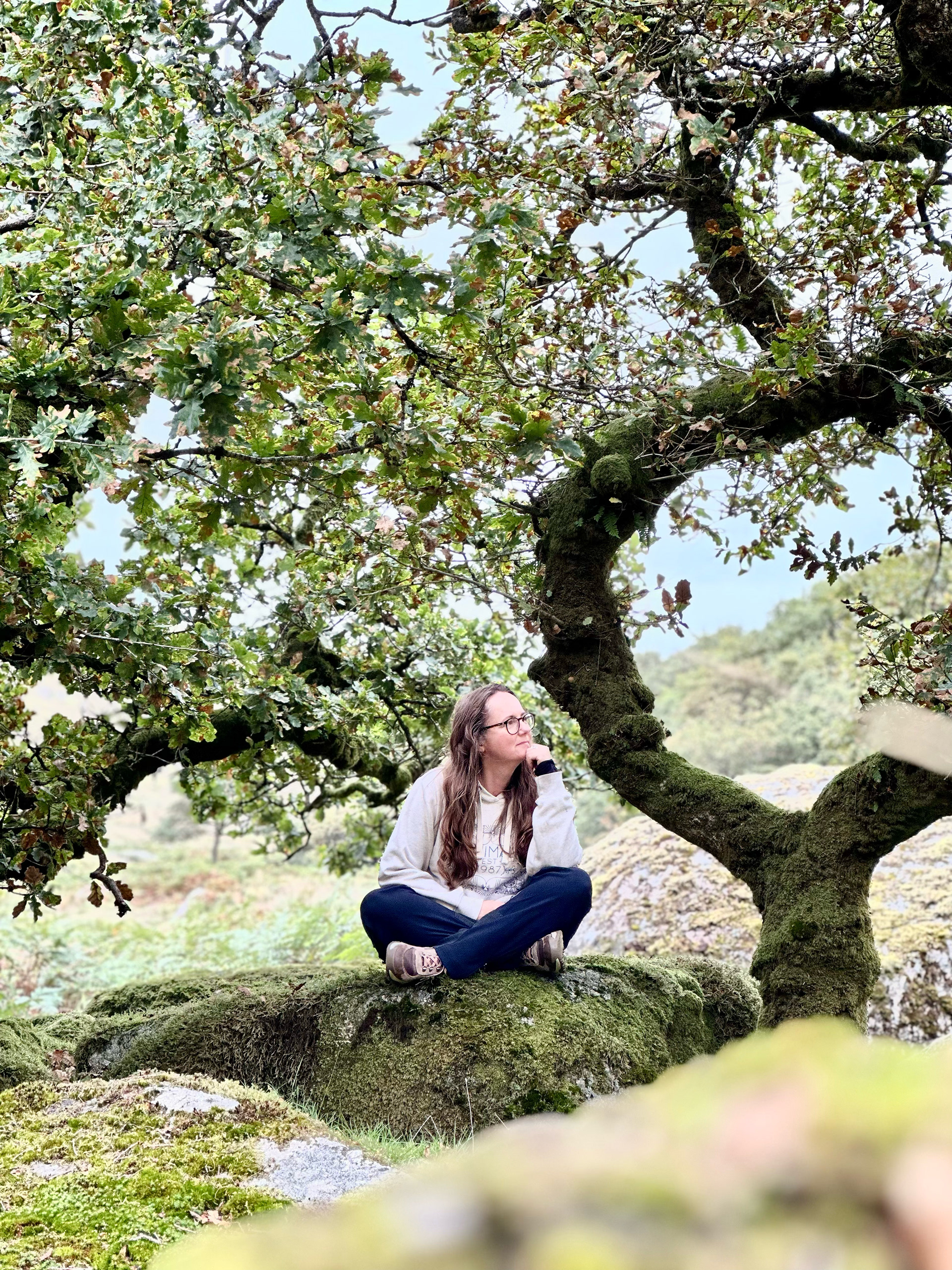
Field Research forms the observational foundation of Rootlines - Common Presence. It develops through direct encounters with specific landscapes, forests and trees, using photography, site visits and field notes as ways of recording both physical detail and personal response.
These studies are supported by historical, ecological and scientific context, as well as conversations with people connected to particular places or areas of research. Each location becomes a case study rather than simply a subject, allowing questions to emerge through observation and return visits.
The fieldwork does not aim to document landscapes objectively, but to create a growing body of visual, material and contextual information that can later develop into drawings, prints, artist books and installation.
ARTISTIC RESPONSES
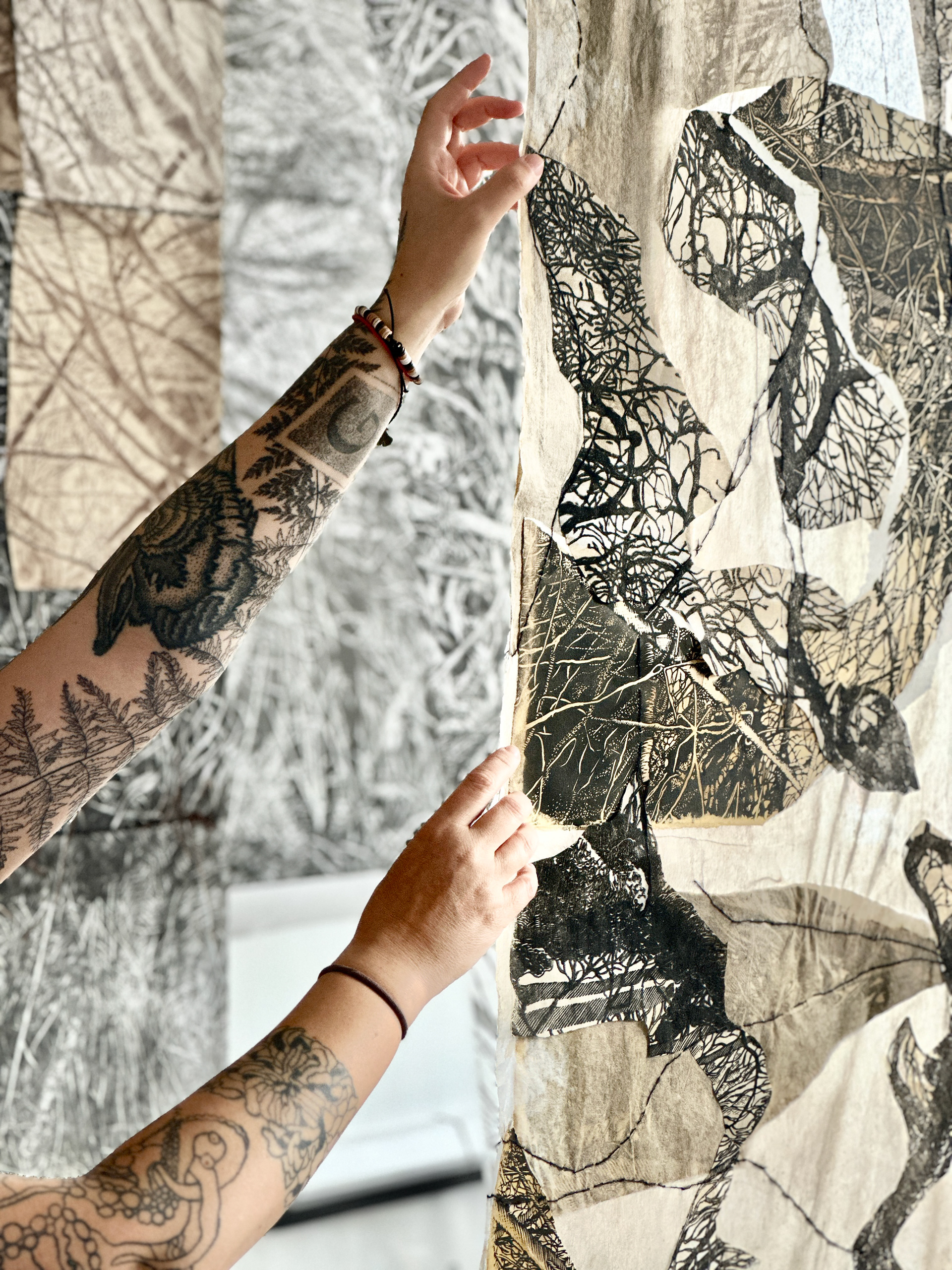
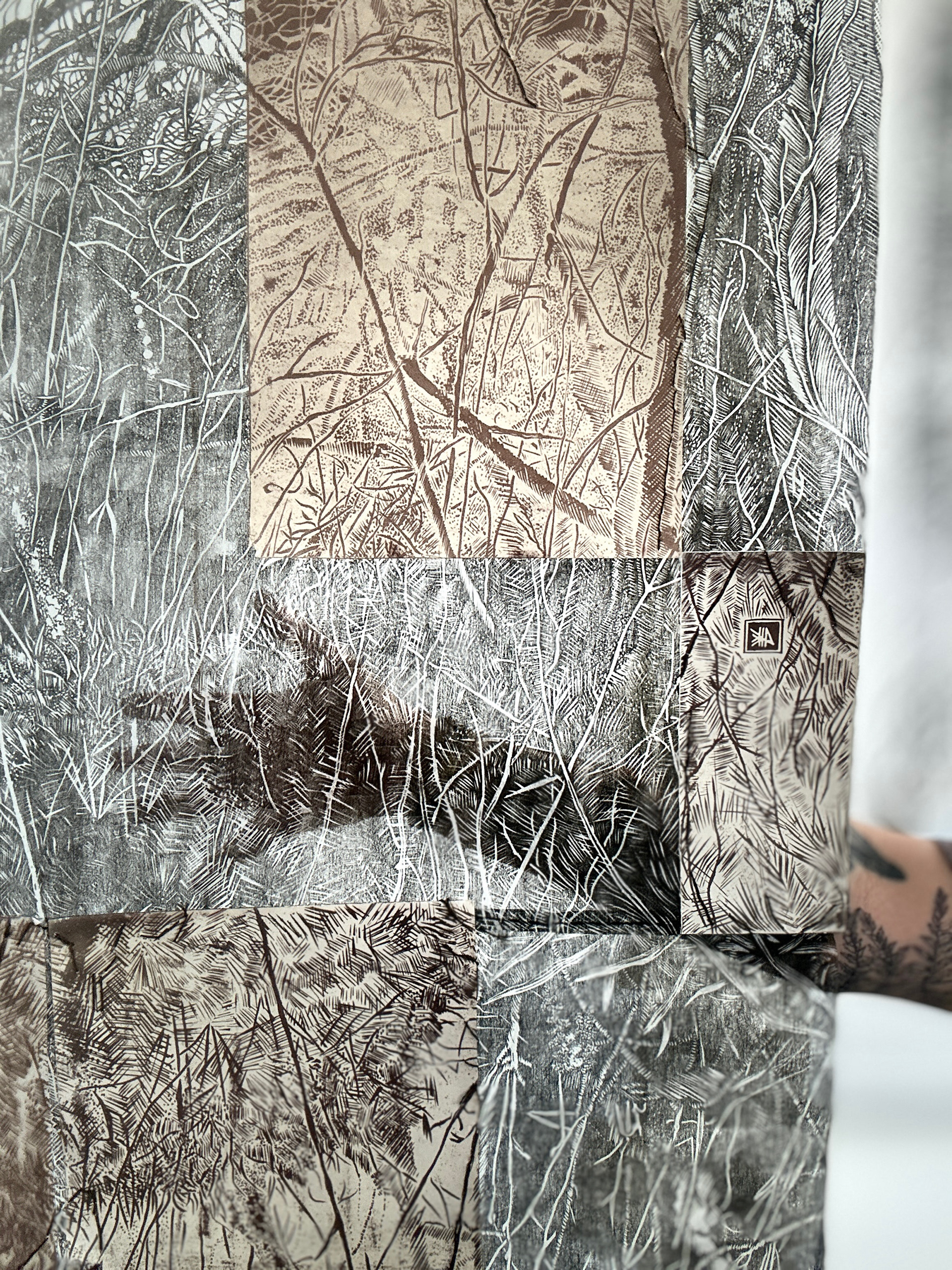
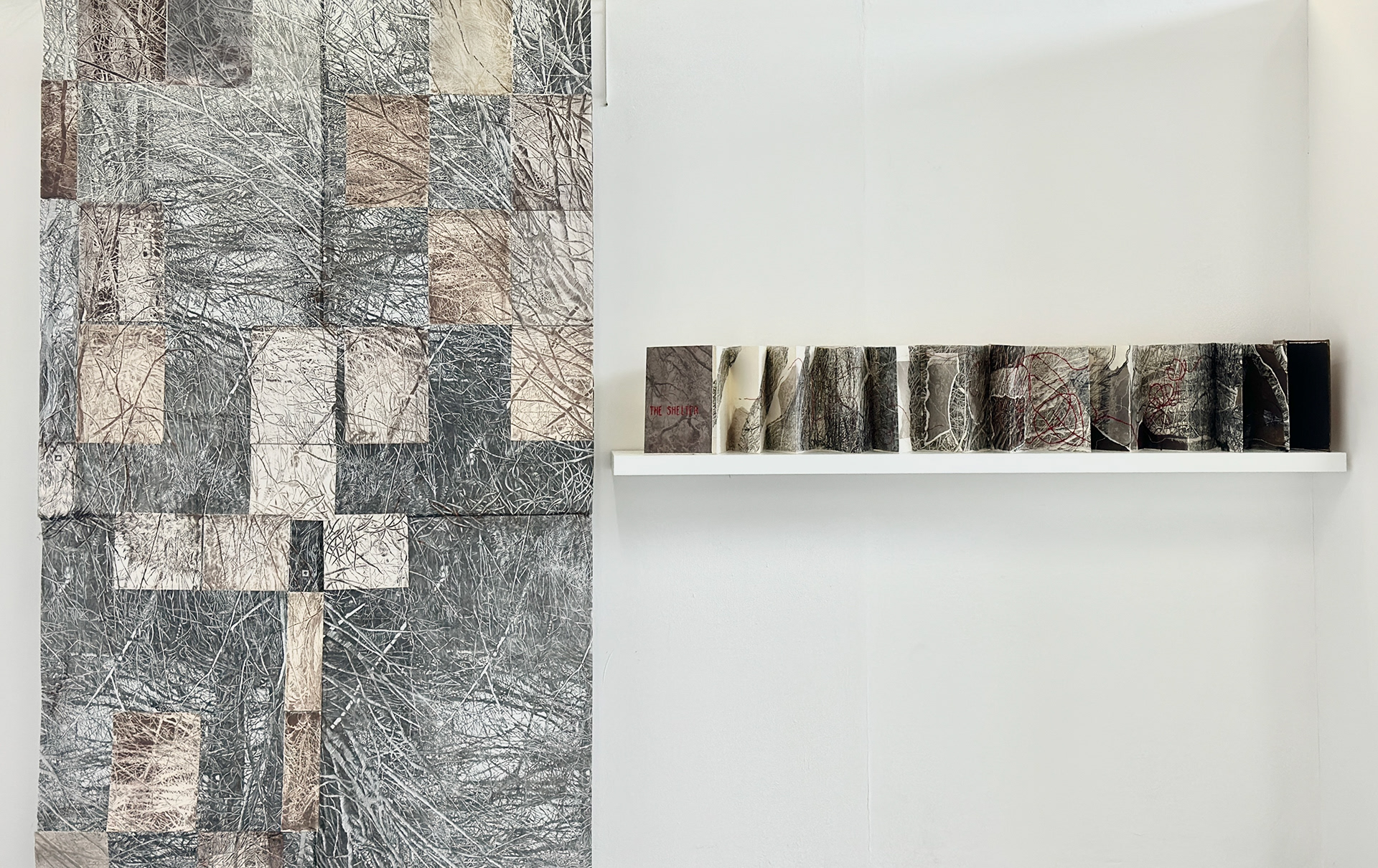
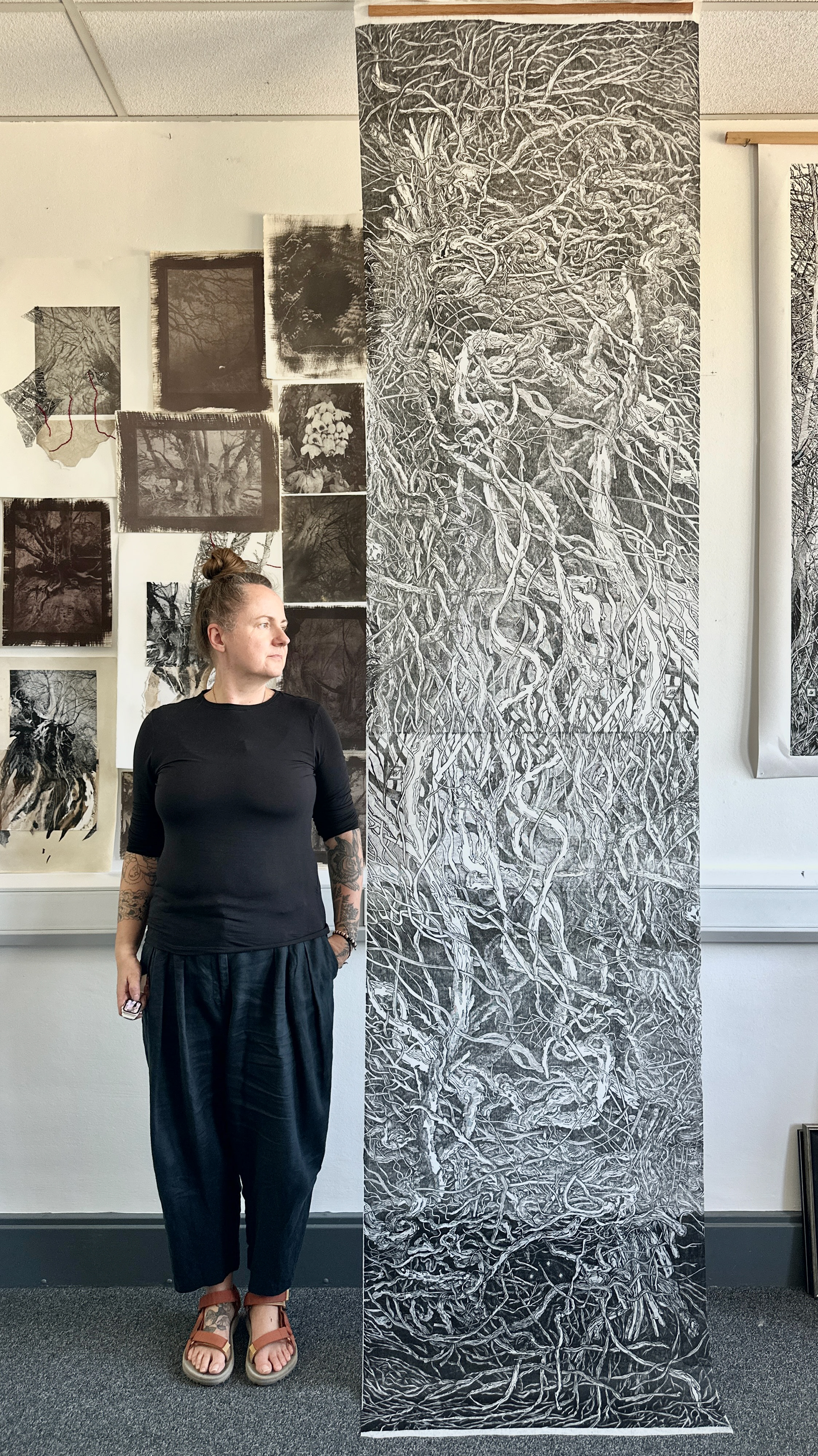
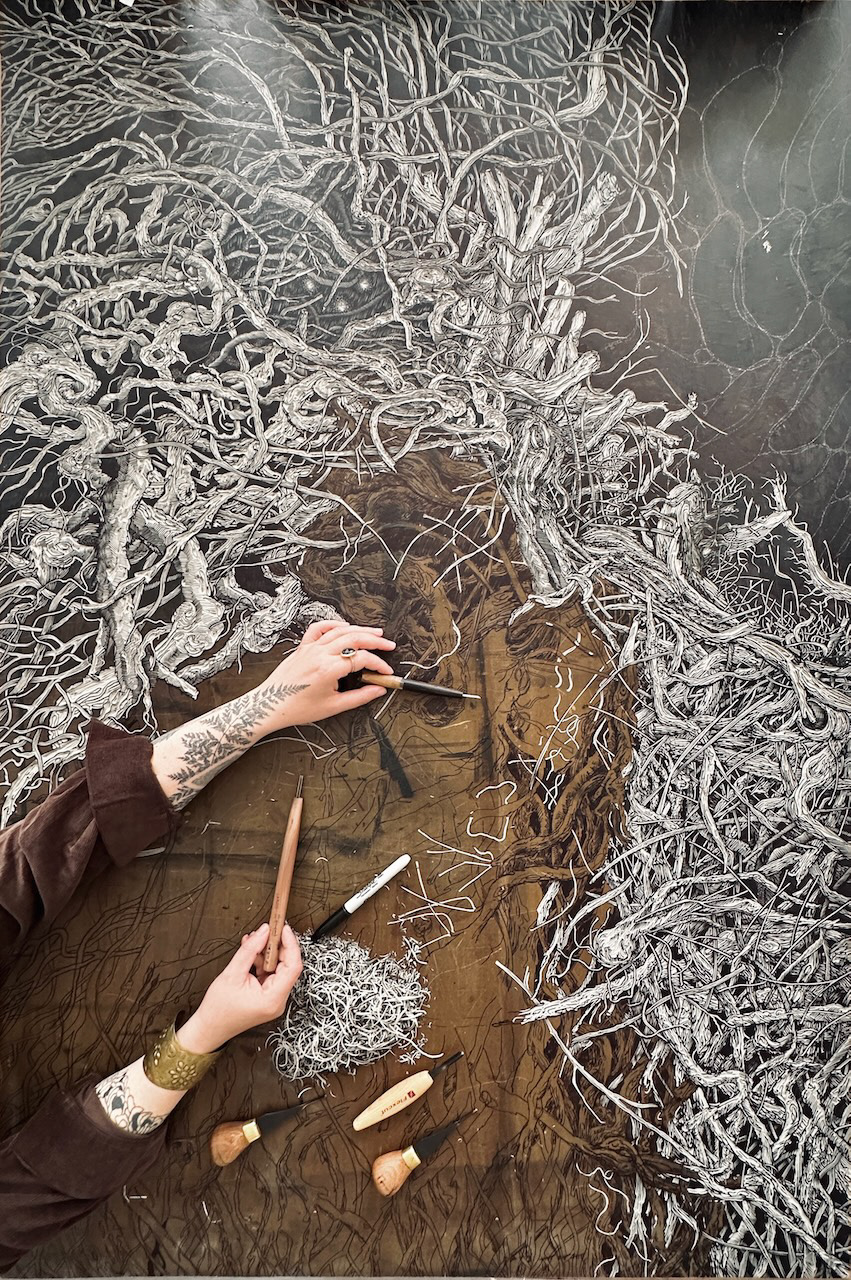
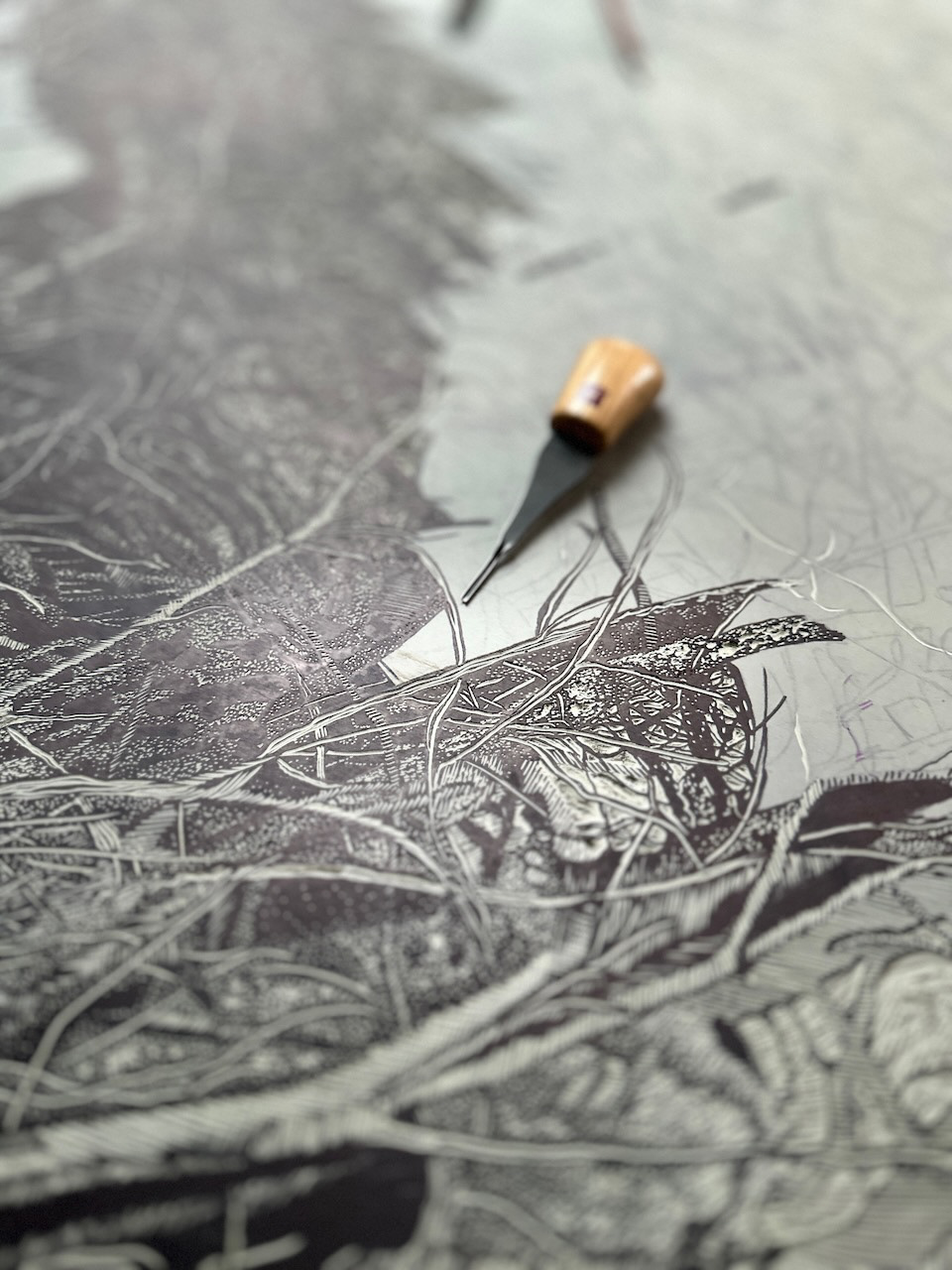
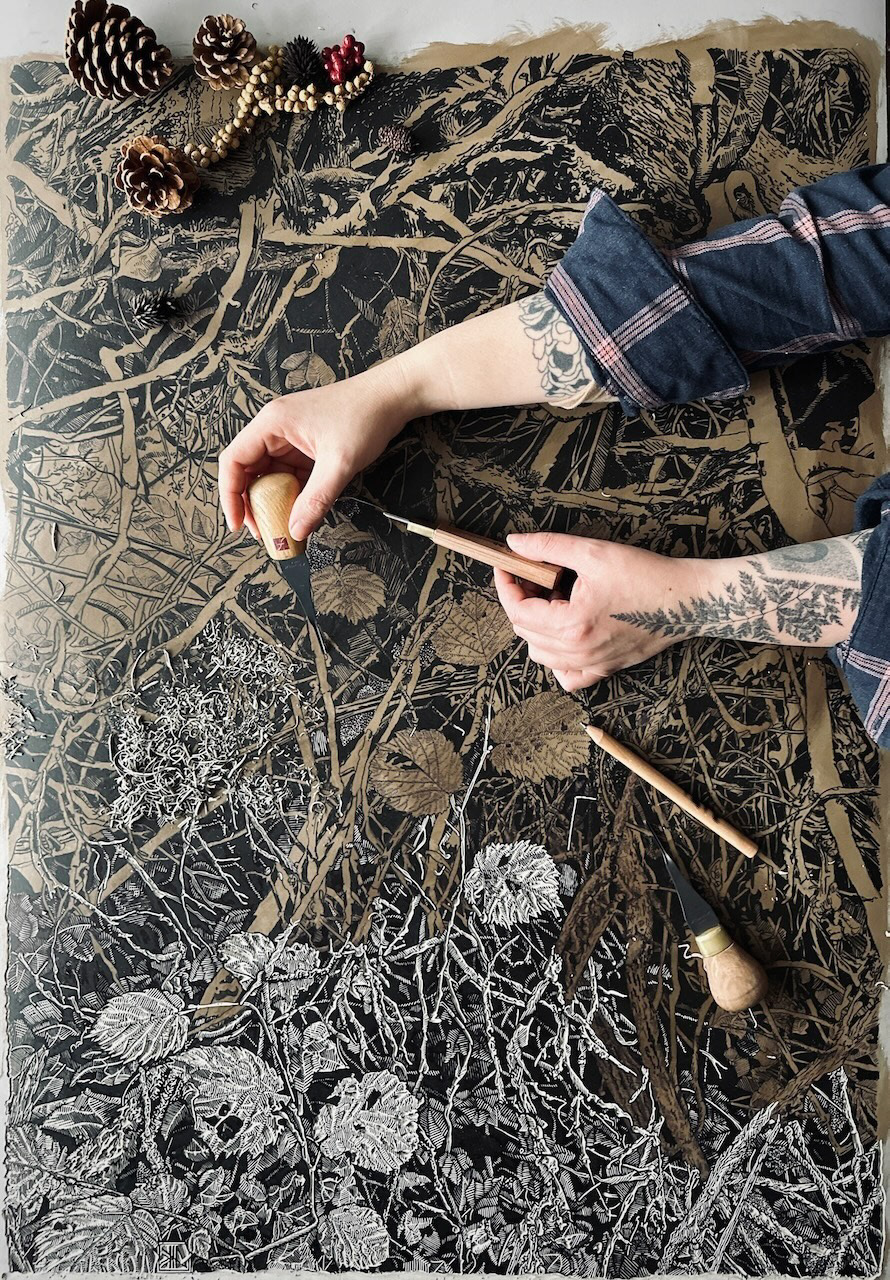
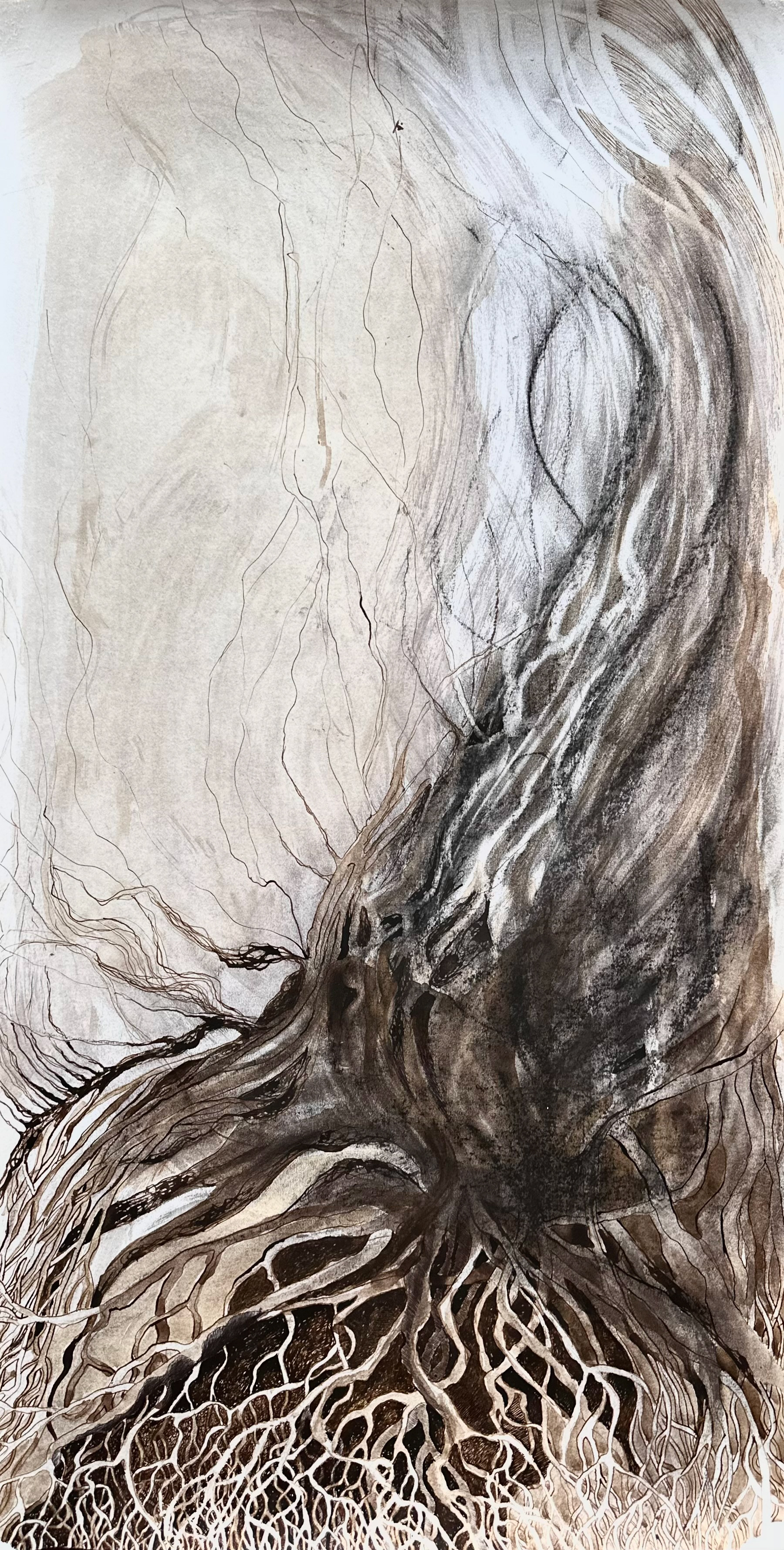
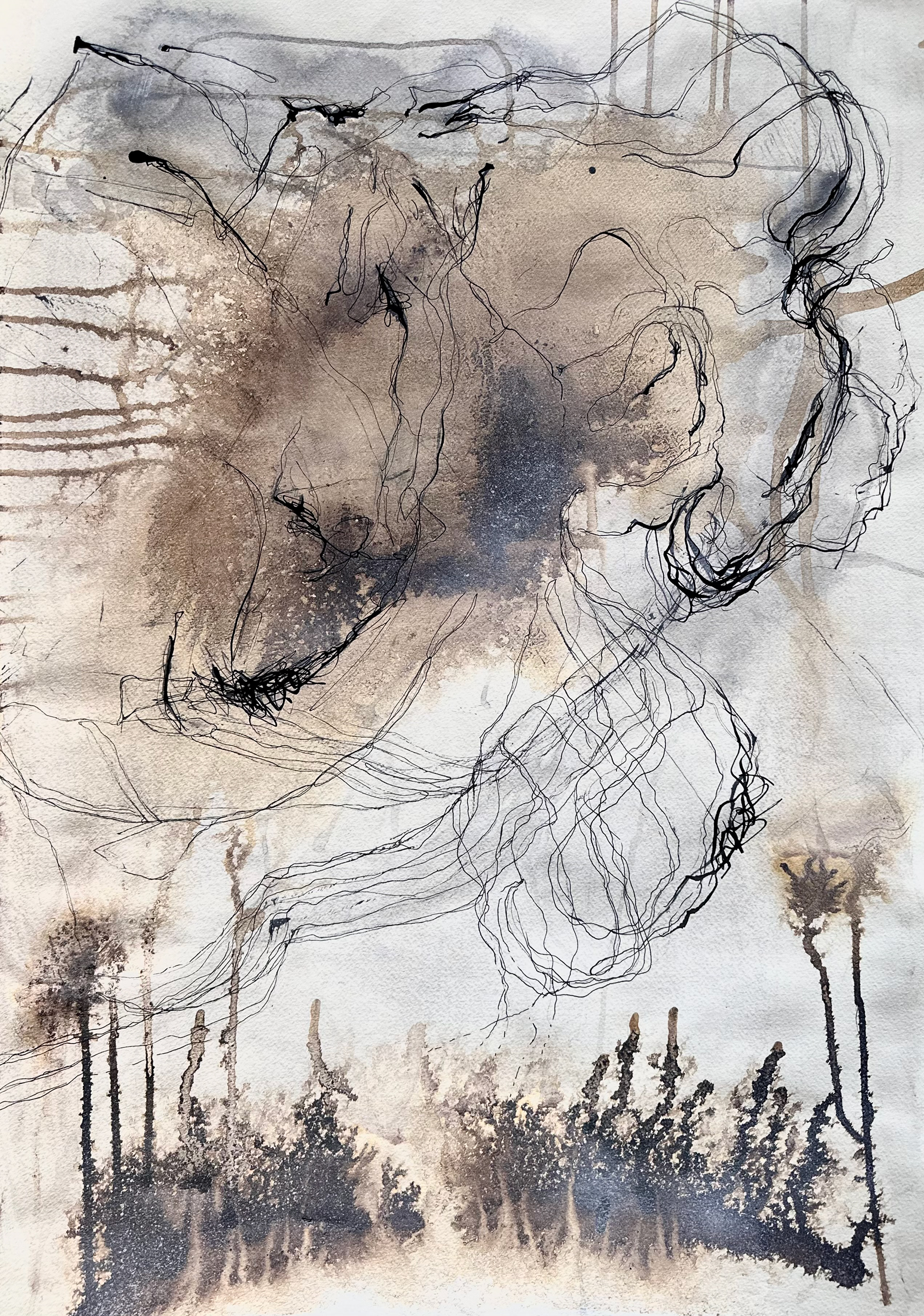
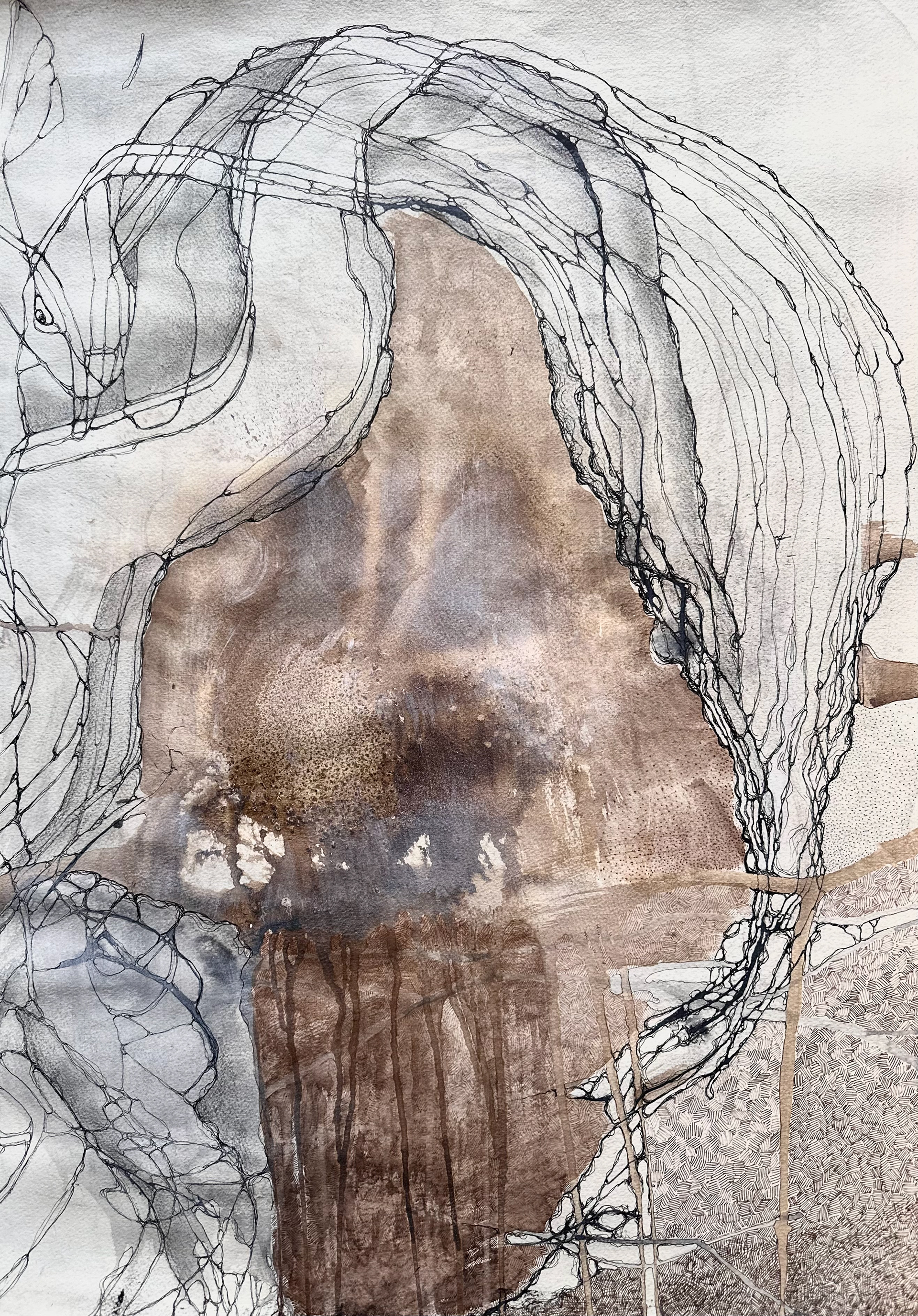
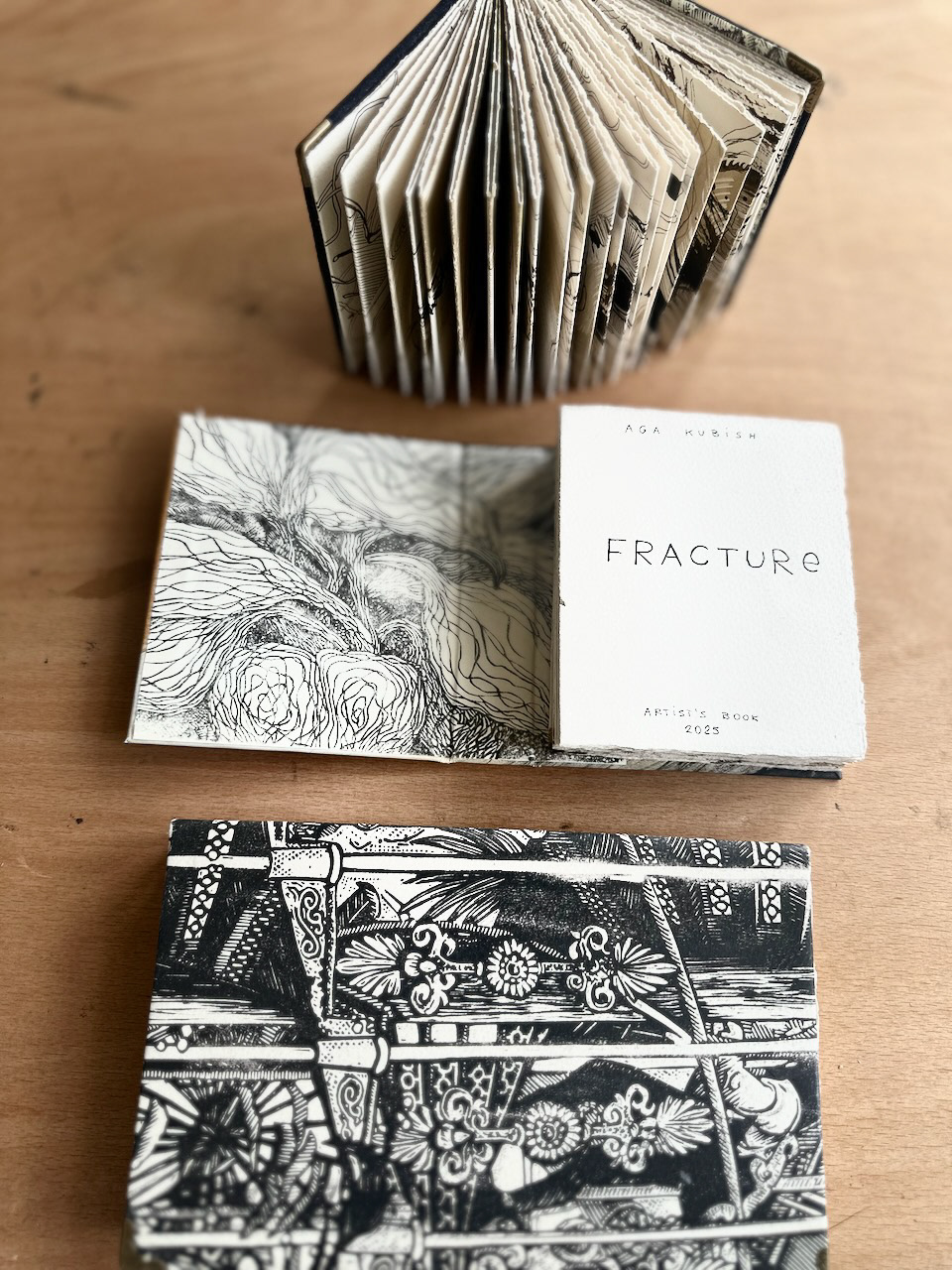
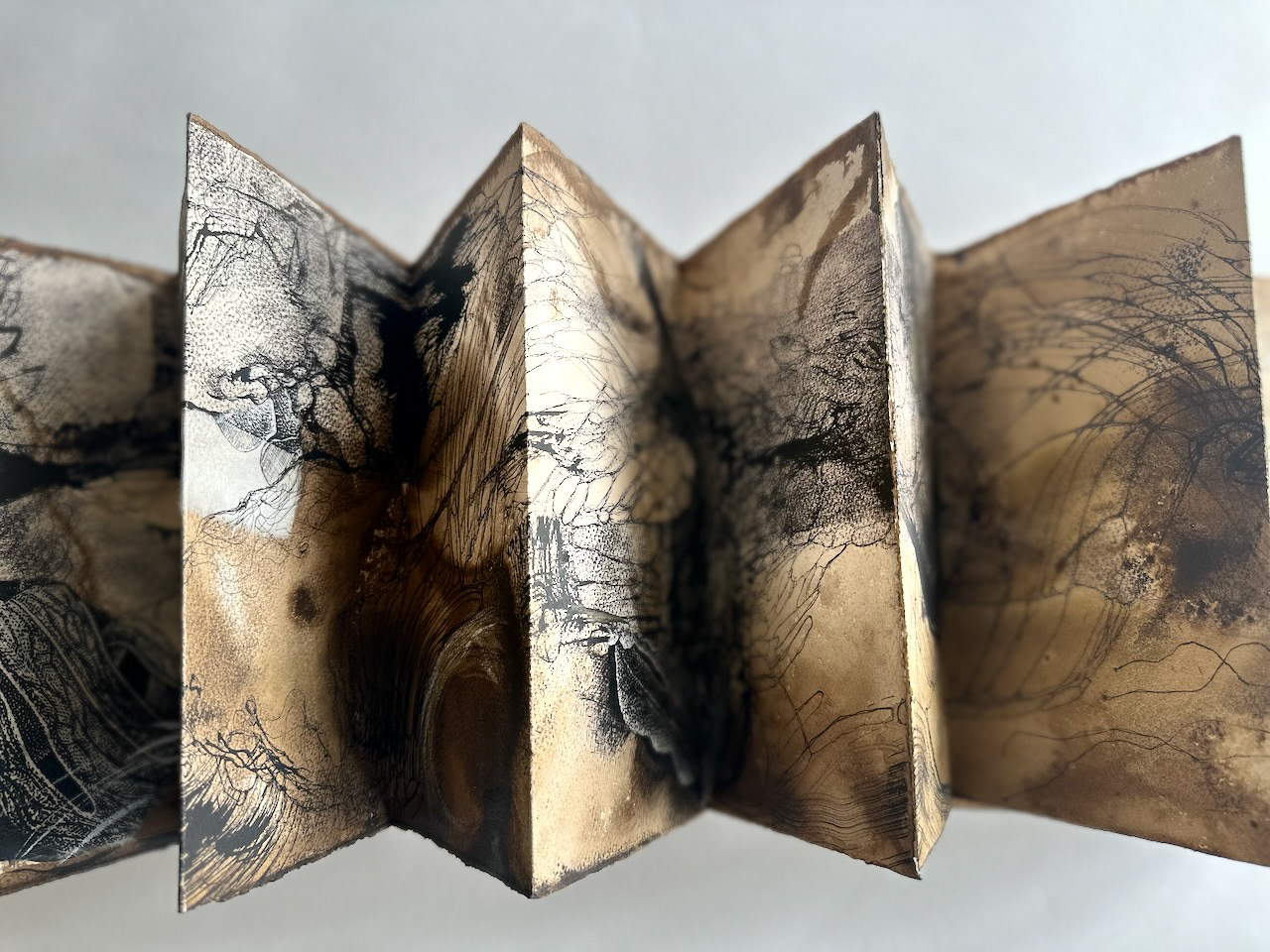
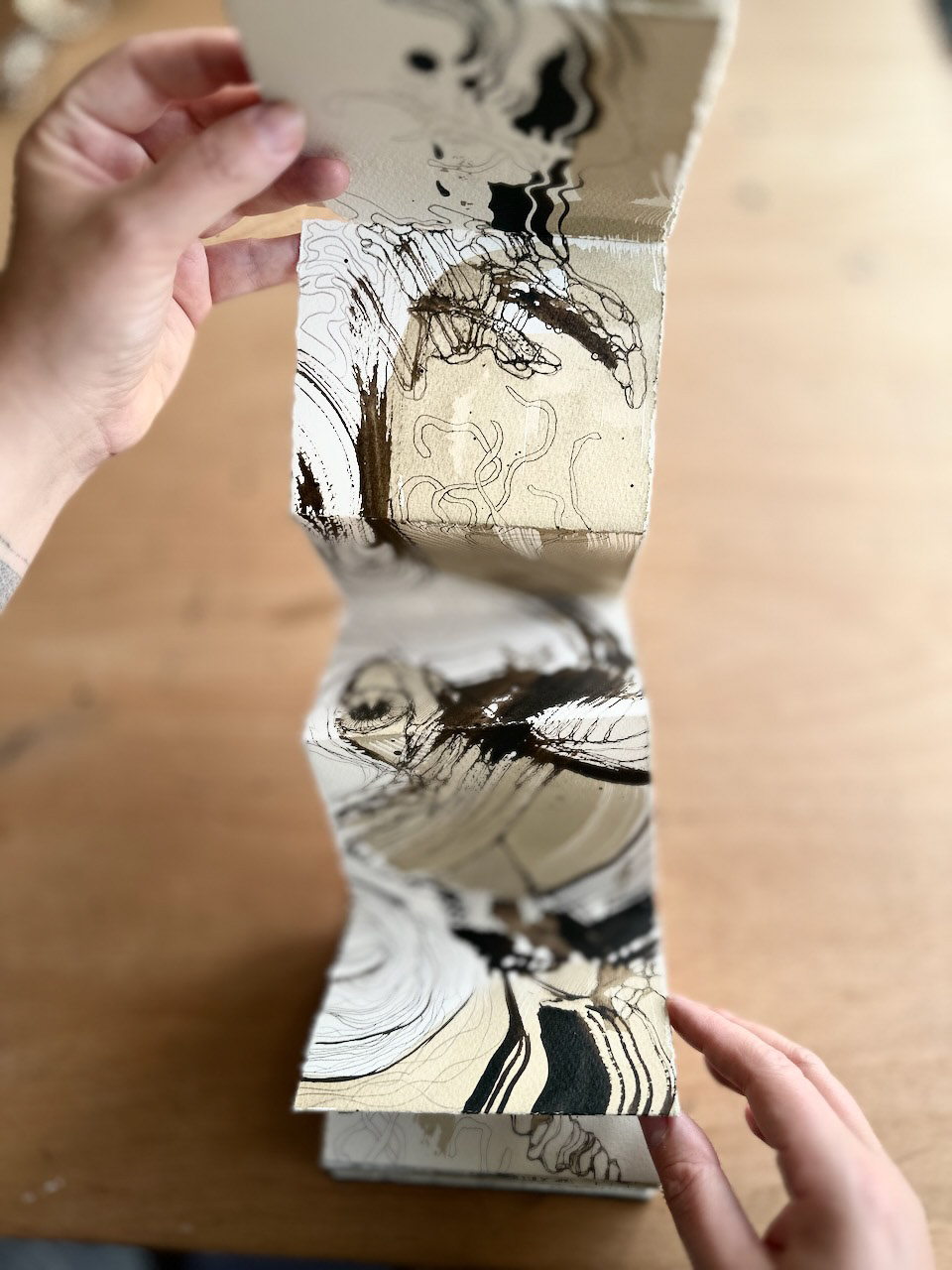
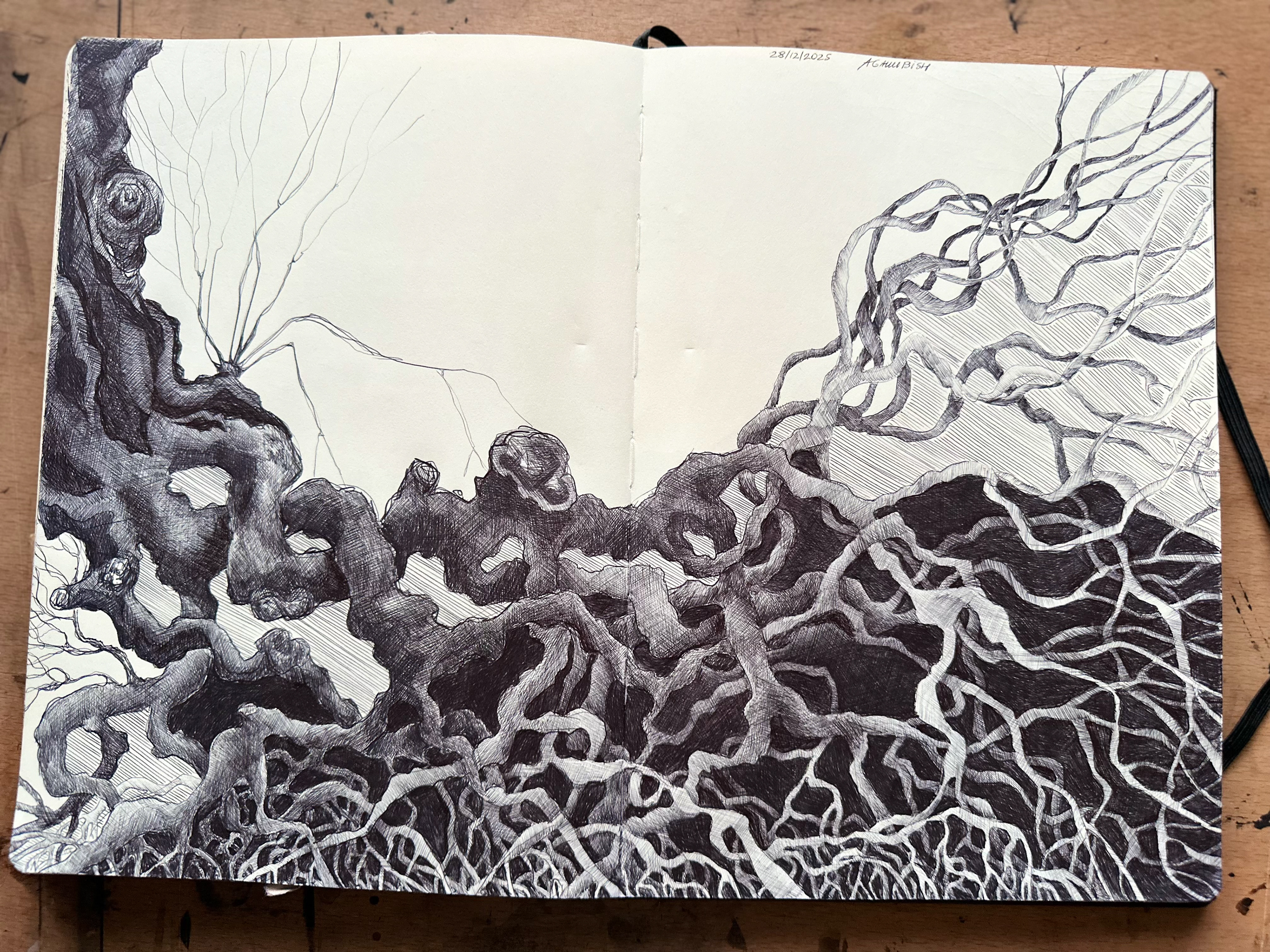
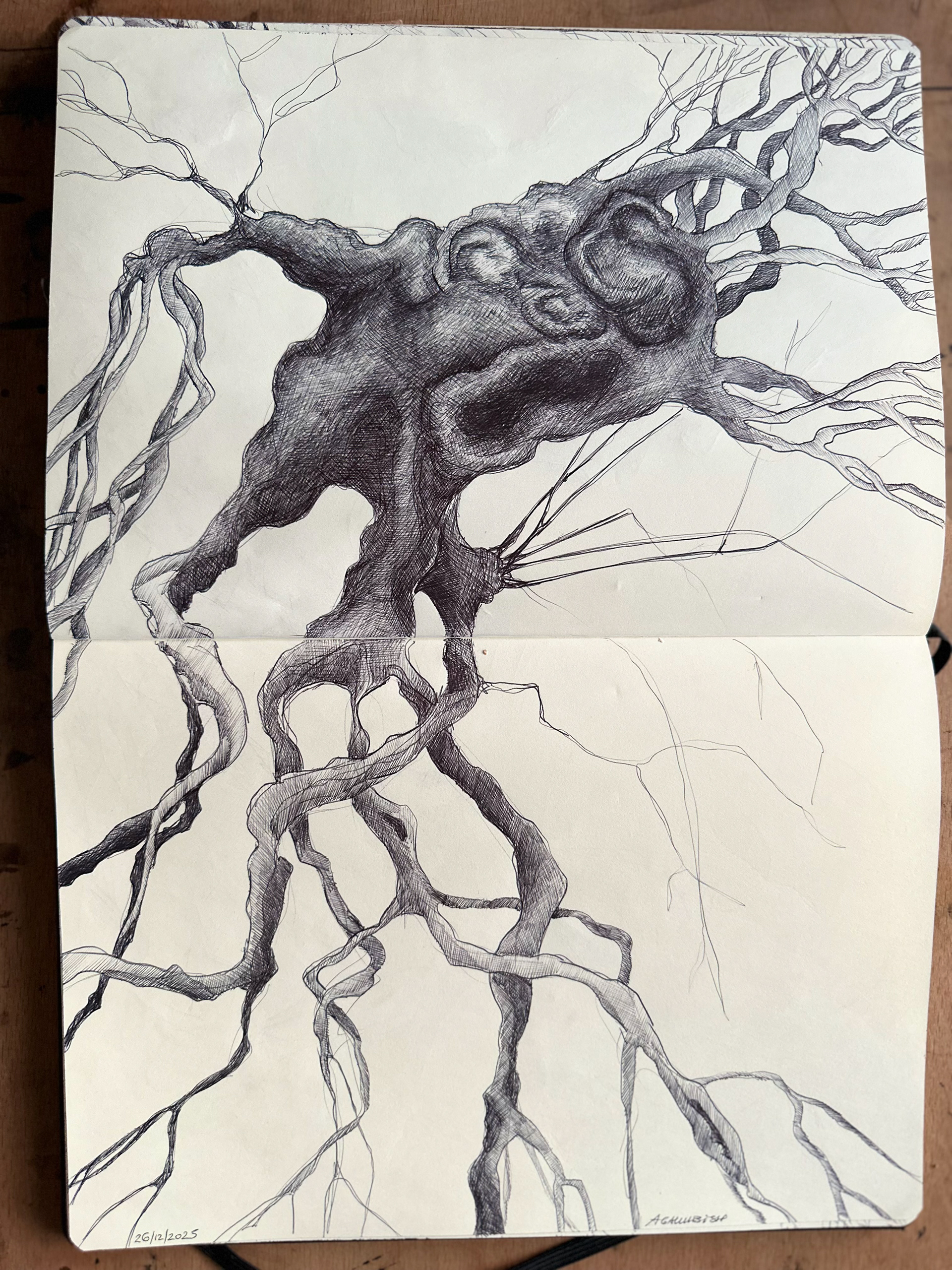
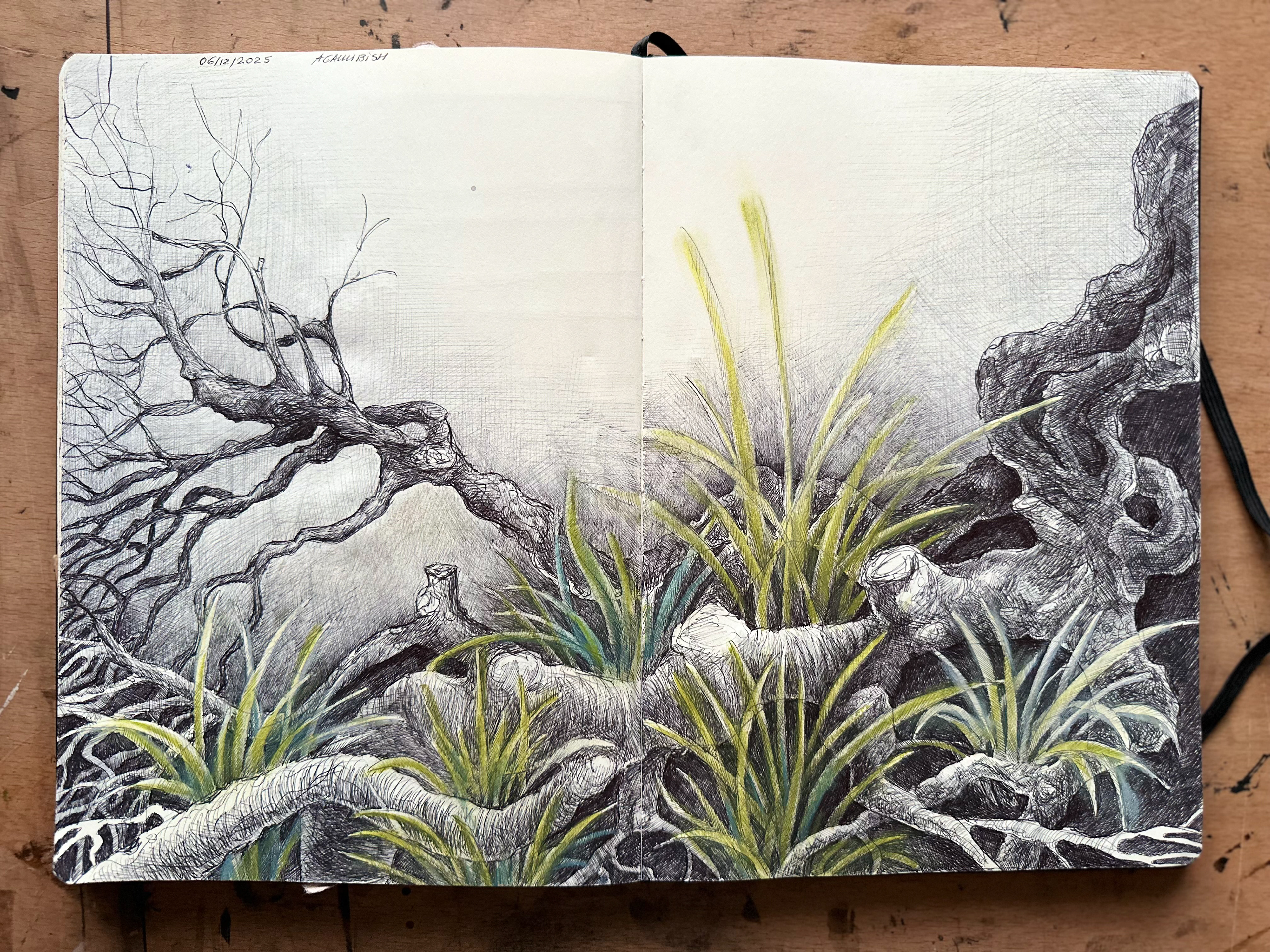
Artistic Responses bring the research into material form through printmaking, drawing, photography, artist books, textiles and installation. Rather than illustrating the research directly, these works translate observations, questions and relationships into visual structures, surfaces and repeated forms.
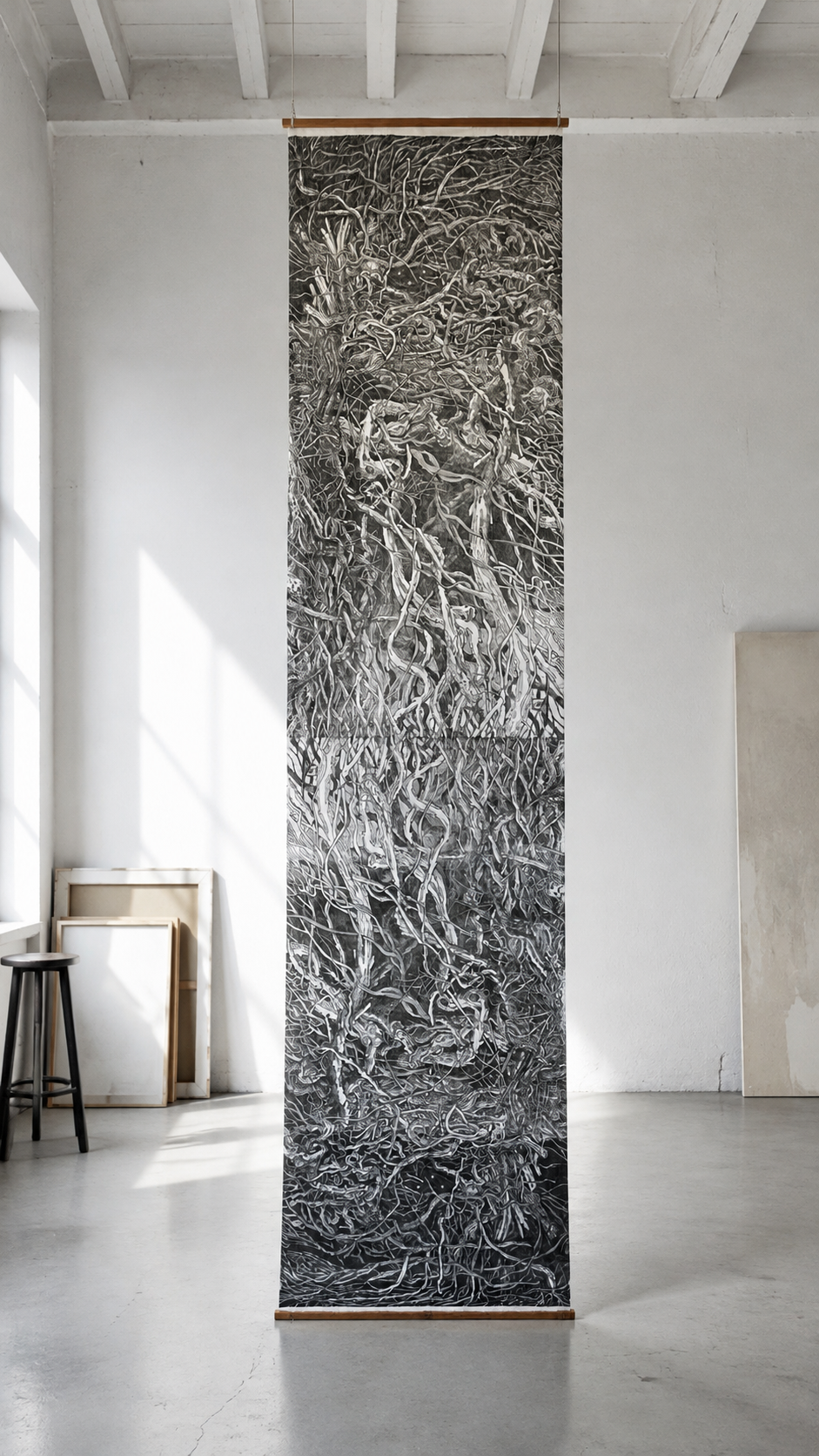
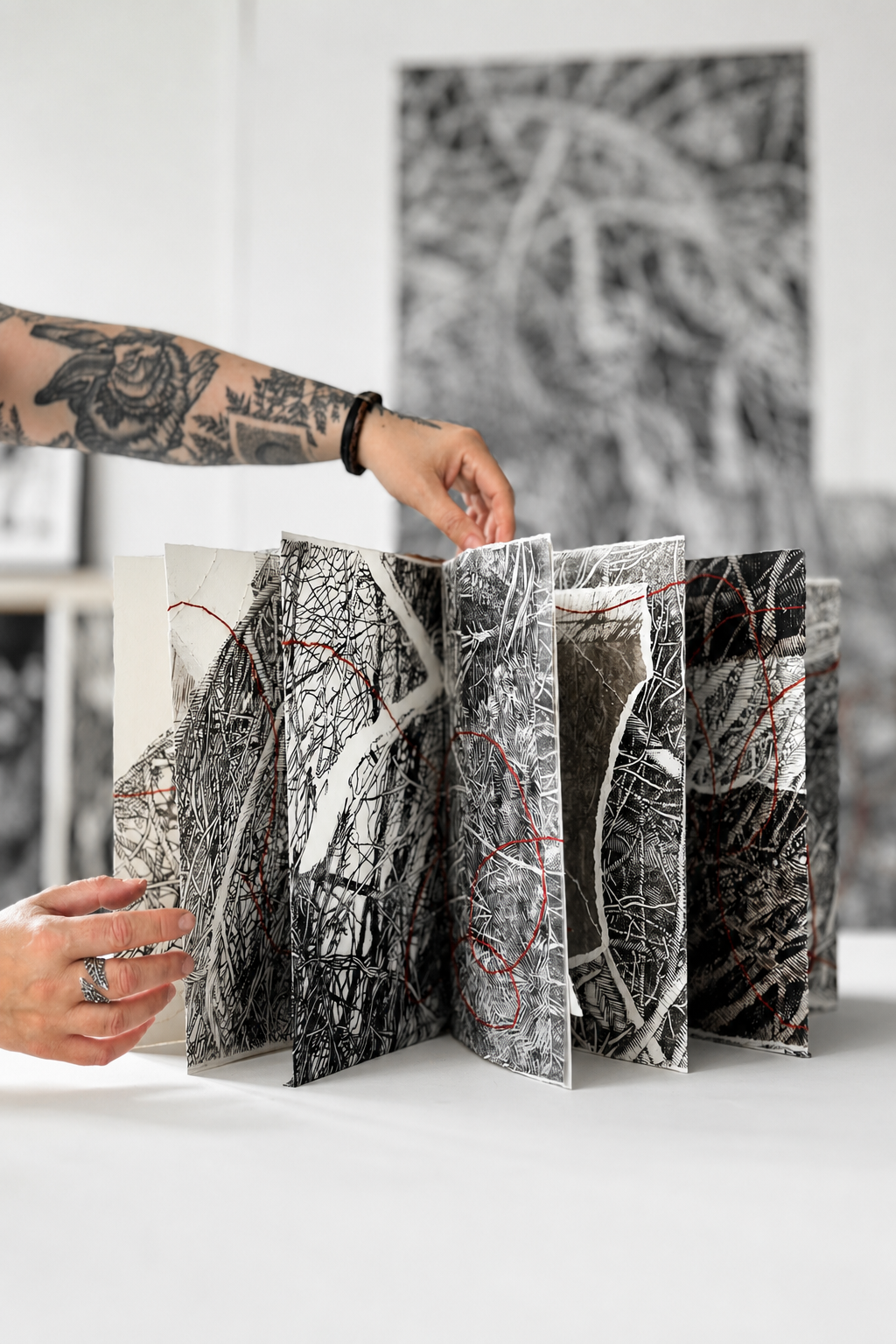
Different media allow different aspects of the project to emerge: printmaking can hold density, repetition and accumulated time; drawing can follow movement and growth more intuitively; artist books can create layered and sequential encounters; while textiles and installation can extend the work beyond the flat surface and into physical space.
The artworks remain closely connected to field research, but are not intended as documentation. They are responses, interpretations and material ways of thinking through the questions raised within Rootlines - Common Presence.
RESEARCH INTO PRACTICE
Research into Practice brings together works that have developed directly from ongoing enquiry into forests, living systems and human presence within them.
Rather than functioning as illustrations of research, these works emerge from repeated observation, fieldwork and reflection, allowing ideas to take physical form through print, drawing, installation and layered materials.
Across projects such as Habitat, The Shelter and Major Oak, the human figure is not positioned outside the forest as a detached observer, but as part of a wider network of relationships, affected by the environment and participating within it.
The work considers how forests shape perception, memory and bodily experience, while also exploring how human presence leaves its own trace within living systems. In this way, each artwork becomes both a response to a specific place or question and a way of testing how research can move into material, spatial and sensory form.